
Standing up a sophisticated scam operation no longer looks like organized crime. Increasingly, it involves assembling a starter kit from open marketplaces with tiered pricing, documentation, and customer support. Running convincing romance scams, pig-butchering, and fake account fraud now comes down to a few thousand dollars. And we have AI to thank for easing the barriers to entry.
That’s the central finding from HUMAN’s Satori Threat Intelligence and Research Team’s investigation into the FunFoneFarm ecosystem: a pathway to an AI-powered, self-sustaining supply chain. What once required technical expertise, significant capital, and coordinated criminal infrastructure now only necessitates a surprisingly modest investment.
The result is a troubling shift: fraud is becoming commoditized.
The Building Blocks of the Underground Economy
Every component uncovered during the FunFoneFarm investigation is, on its own, relatively ordinary. Phone hardware is openly sold on mainstream marketplaces. Device orchestration software comes with polished documentation and customer support. Cloud-hosted Android devices can be rented by subscription. AI assistants help generate automation scripts, create fake dating and adult-content profiles, and even manage conversations between those fake accounts and unsuspecting victims.
Individually and in isolation, none of these technologies is inherently malicious. Together, however, they form the fundamental building blocks of a modern, turnkey fraud supply chain.
The easiest analogy is cloud computing. These services make it possible for anyone with an idea to launch a software startup without buying servers or building infrastructure from scratch. FunFoneFarm demonstrates that a similar transformation is happening in cybercrime. Instead of lowering the cost of entrepreneurship, these tools lower the cost of fraud.
The infrastructure has become modular, scalable, and remarkably accessible.
A Recipe for Fraud, by the Ingredient List
One of the most striking aspects of the Satori research wasn’t simply identifying the ecosystem, it was calculating what it actually costs to participate in it. Researchers priced out two realistic paths for launching a modern scam operation, much like anyone would buy software-as-a-service:
Both models are remarkably inexpensive when viewed against the scale of the criminal opportunity.
Estimates indicate that romance scams and pig-butchering schemes alone cost victims $27.8 billion annually. A monthly operating budget of roughly $450 can now manage infrastructure that previously required a well-funded criminal enterprise complete with physical facilities, technical specialists, and large operational teams. Fraud has become a recurring subscription business, much like your average streaming service.
AI Priced Out the Sweatshop
Perhaps the most consequential shift isn’t the phone hardware or the automation software. It’s AI.
Historically, many large-scale romance scams and pig-butchering operations depended on enormous amounts of human labor that in and of themselves were crimes within crimes. Operators needed people to sustain believable conversations for days or weeks, often across multiple languages and time zones. Investigations over recent years have shown that many of these operations relied on trafficked workers forced to conduct scams from compounds across Southeast Asia, adding another, more nefarious aspect to these criminal operations.
AI changes the economics of that model. When one bot can sustain hundreds of conversations at once, in any language, around the clock, an operation no longer needs rooms full of coerced workers. Purpose-built AI “dating bots” now handle the early-stage conversations at scale.
Importantly, this isn’t a story about AI improving working conditions or saving human trafficking victims. It’s a story about AI removing one of fraud’s remaining natural constraints to scale and erasing one of its few visible, human footprints. The human workforce that once limited how quickly scams could scale is increasingly becoming just another line item that operators can reduce or eliminate. On the startup-cost worksheet, “chatters” become optional. As AI capabilities improve, the lowest-cost, highest-scale fraud operations may eventually require very few humans in the loop at all.
The New Challenge for Defenders
As phone farms become cheaper, cloud devices become easier to rent, and AI continues lowering technical barriers, the number of people capable of running sophisticated scams will only increase. The same general-purpose AI that helps developers write software faster also helps threat actors iterate faster. The same subscription economy powering legitimate businesses now powers criminal ones as well.
This is why understanding ecosystems like FunFoneFarm matters. The challenge is no longer stopping one piece of malware or dismantling one fraud ring. Defenders must recognize an interconnected marketplace where infrastructure, automation, AI, and cloud services continuously reinforce one another.
Insights from the FunFoneFarm research have already informed new detection tactics across the Human Defense Platform. The downstream attacks launched from these ecosystems—including fake account creation, account takeover, and carding—are detected by HUMAN Sightline Cyberfraud Defense, helping organizations identify and disrupt both automated and human-operated fraud.
The internet is rapidly becoming an environment where humans, bots, and legitimate AI agents all interact simultaneously. That future requires a new security model. As the leader in Agentic Trust, HUMAN is building the behavioral intelligence needed to distinguish humans, bots, and AI agents at internet scale—allowing legitimate agents to operate freely while governing fraudulent activity before it acts.
Grow with Confidence
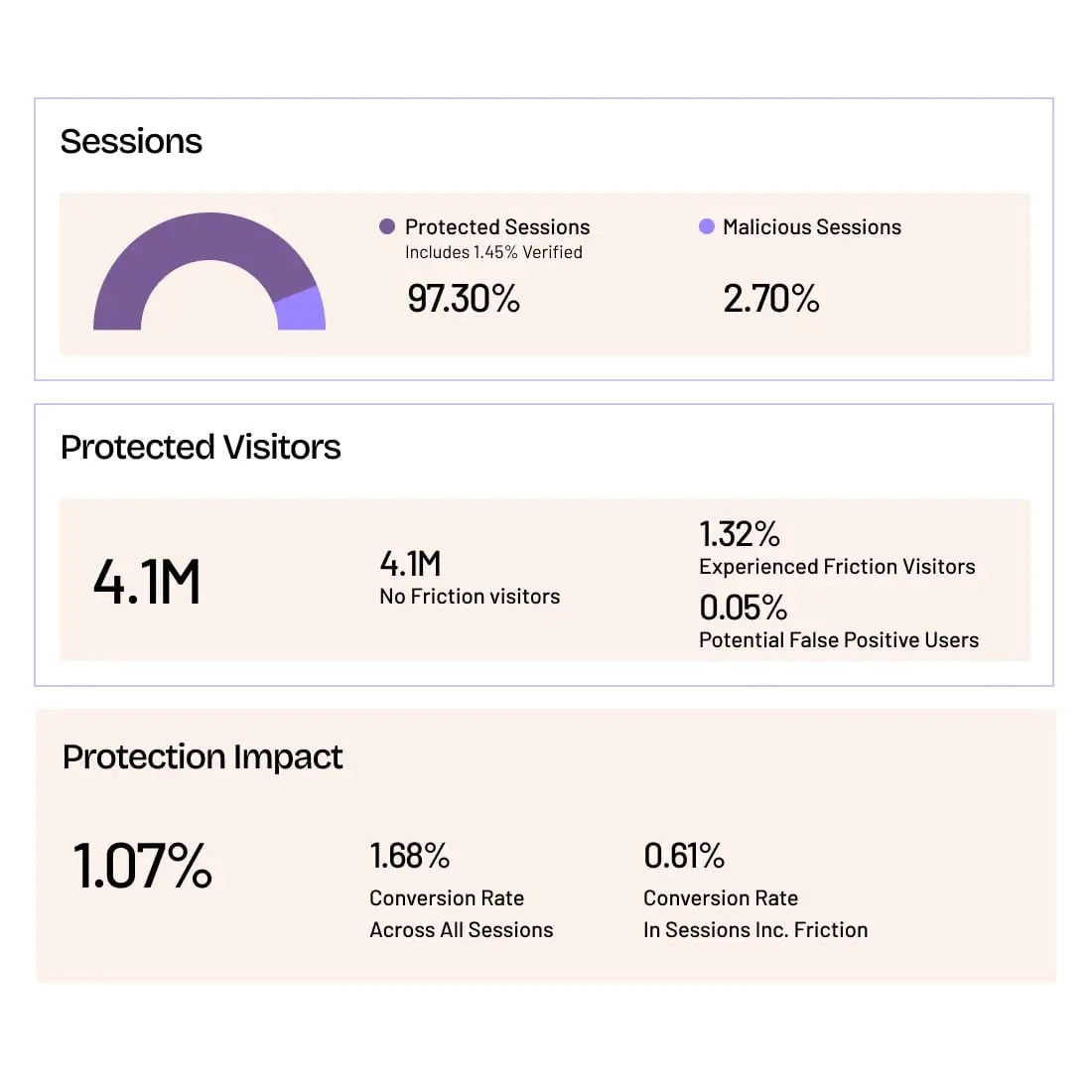
HUMAN Sightline protects every touchpoint in your customer journey. Stop bots and abuse while keeping real users flowing through without added friction.
Grow with Confidence
HUMAN Sightline protects every touchpoint in your customer journey. Stop bots and abuse while keeping real users flowing through without added friction.