- Applications
- Client-Side Defense
- Client-Side Supply Chain
Client-Side Supply Security to Safely Benefit from Browser Scripts
Get full visibility and control over client-side scripts while surgically blocking risky behavior—without disrupting scripts’ business value.
Safely Benefit from Browser Scripts
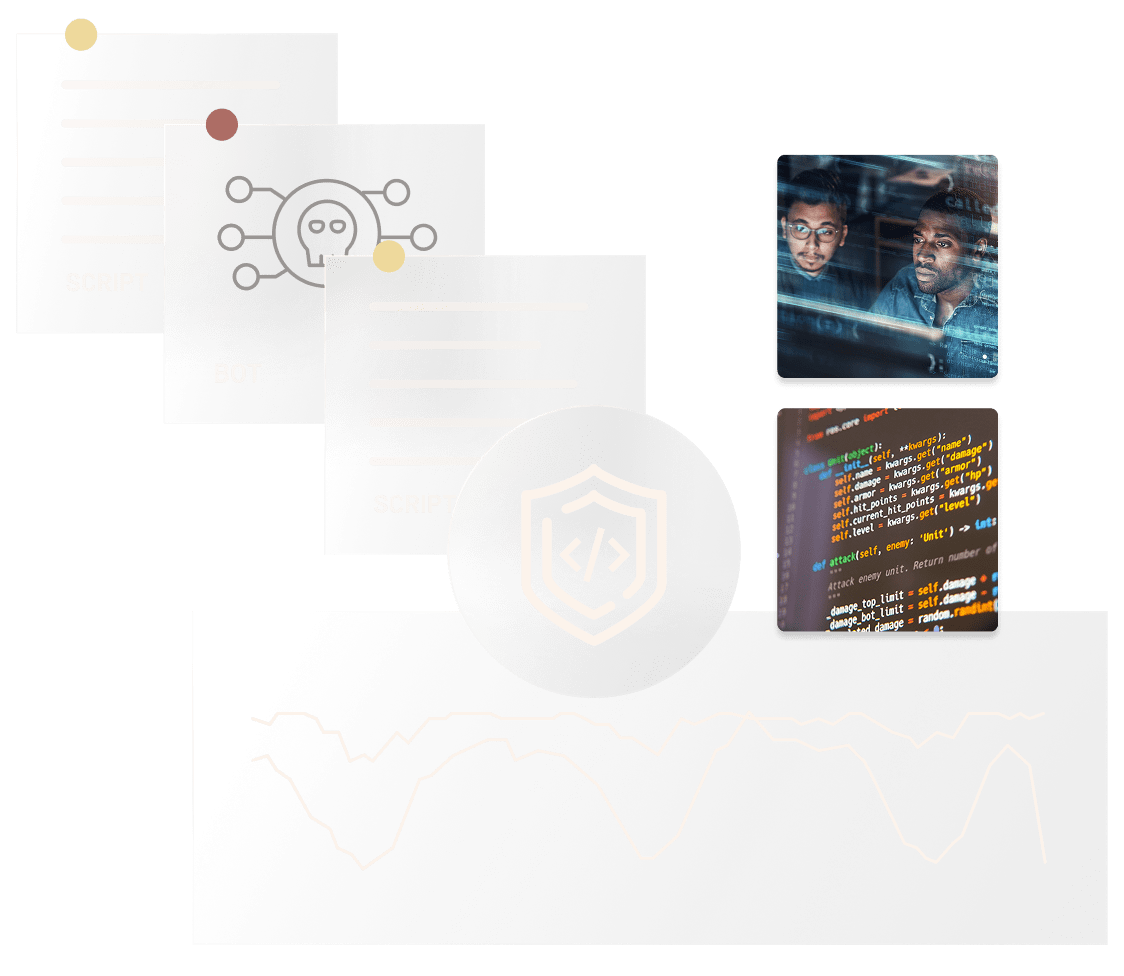
Put invisible guardrails around client-side scripts to protect against digital skimming, Magecart, and other client-side supply chain attacks without limiting agility.

Get Complete Visibility
See all client-side 1st- and Nth-party script behavior in the browser during real visitor sessions.

Enact Granular Controls
Automate zero-trust policies to block risky script behavior, such as attempts to skim sensitive information from web forms.

Enable Business Value
Surgically block unwanted script actions, such as reading payment data and credentials, without interrupting the script’s business value.

Key Capabilities
Client-side Defense offers powerful capabilities to protect against client-side supply chain attacks, including digital skimming, Magecart, and formjacking.
Detailed Reporting and Investigation Tools
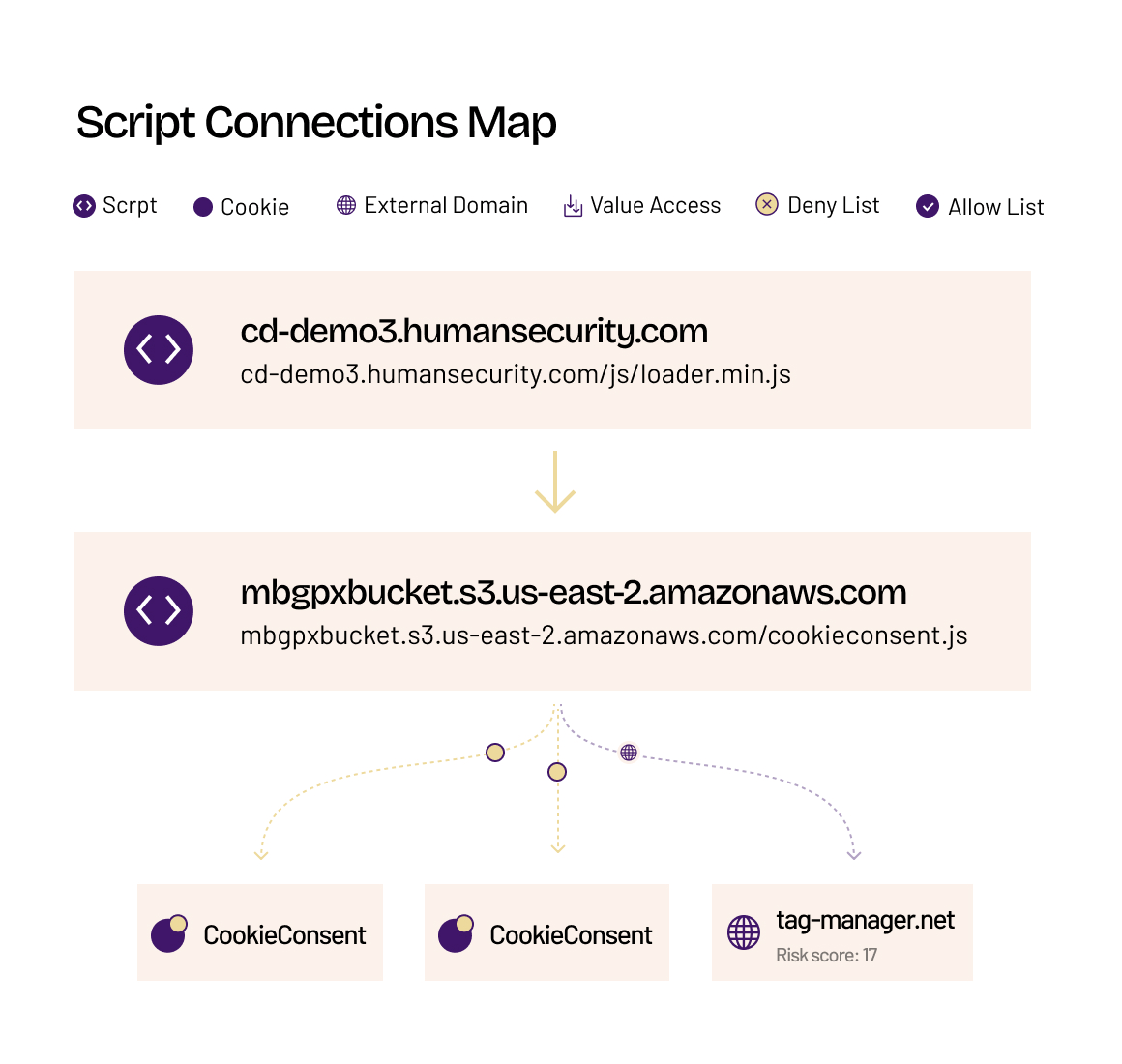
Get details on client-side 1st- and Nth- party scripts, including provenance, vulnerabilities, and cookies. See scripts’ DOM, storage, and network actions, such as sensitive data access and risky-domain communication.
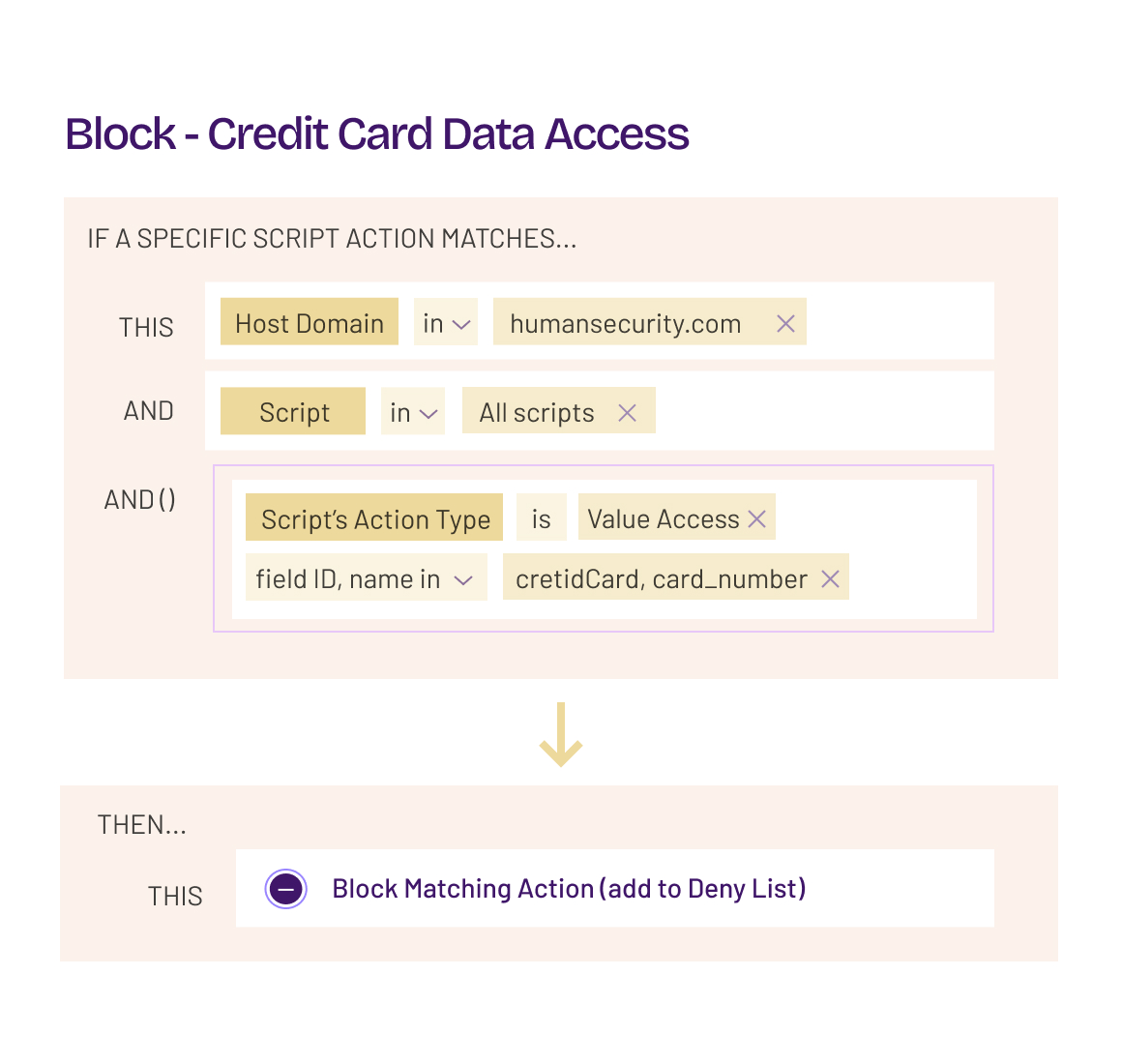
Granular Mitigation Policies
Automatically enforce granular controls over client-side scripts, vendors, and actions without blocking the entire script. Enable browser script use while reducing risk of privacy, security, and compliance violations.
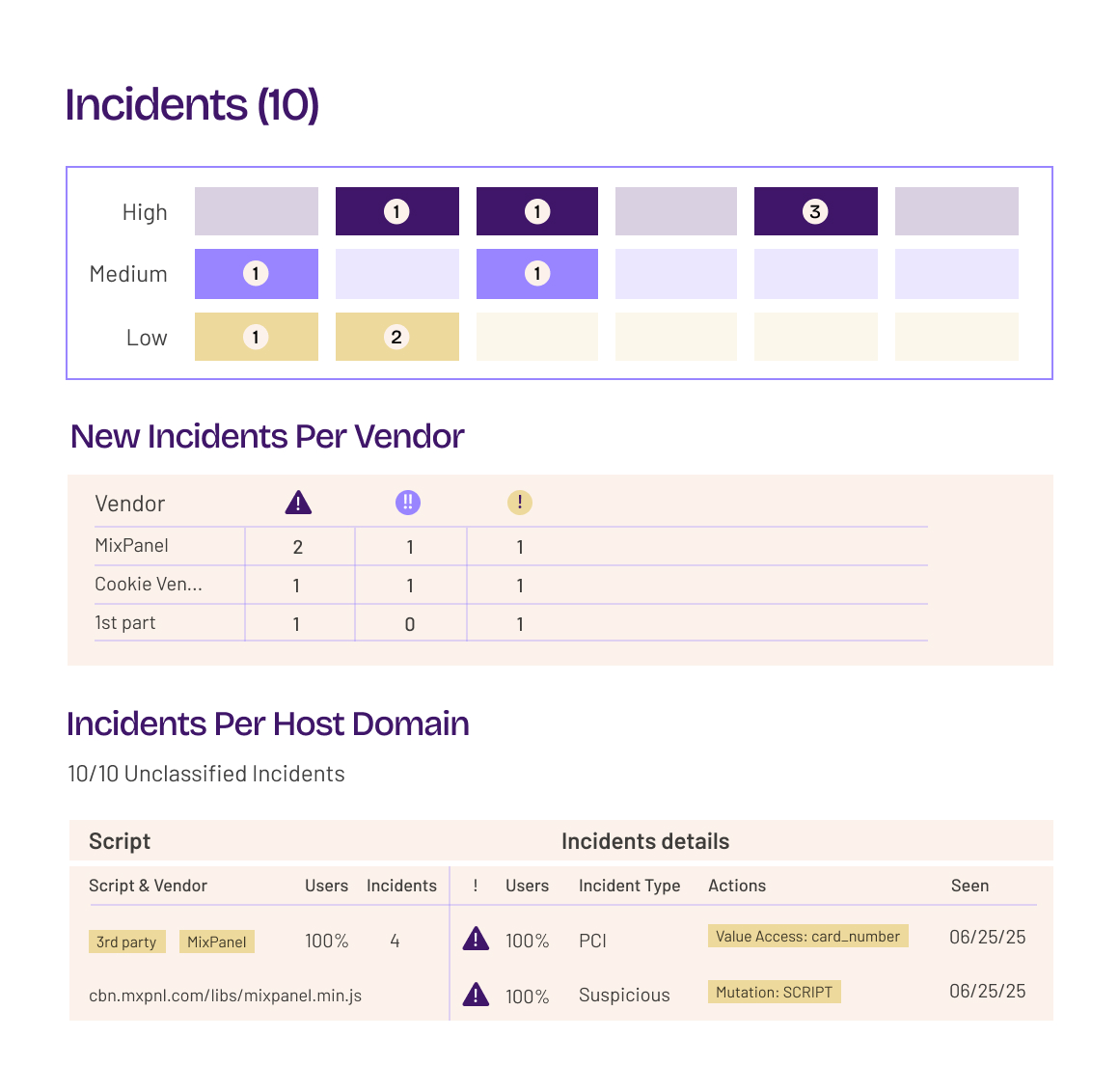
Incident Visibility and Integrations
Review script incidents across your site. Seamlessly integrate with messaging, ticket management, SIEM, and collaboration tools to share knowledge and take action within your workflows.

Protecting Customers from Evolving Risks
HUMAN is trusted by global organizations across industries to protect against client-side supply chain attacks.

Client-side Defense helps us identify the known risks to our website, and enables us to work with our partners in e-commerce to mitigate those risks.
Senior Manager, Security Architecture & Engineering
Sally Beauty
90%
time savings
Gained visibility
into script behavior at runtime


The solution pays for itself by reducing our risk from client-side data breaches and helping avoid fines and the subsequent negative impact to our brand.
CISO
Top 5 Global Airline
Reduces risk
of data exposure and theft
Improves efficiency
by reducing manual investigation



HUMAN is a fantastic solution for managing business critical scripts, and addressing the new PCI DSS 4 requirements (6.4.3 & 11.6.1) with ease. It not only adds another layer of defense to our overall security posture, but helps my team prioritize and reduces the need for time-intensive manual investigations and record-keeping activities.
Senior Security Developer, Information Security Team
Priceline
Secures scripts
without interrupting business value
Saves time
on script investigations



Threat Intelligence:
The HUMAN Element
The Satori Threat Intelligence Team uncovers, analyzes, and disrupts cyberthreats and fraud schemes that undermine trust across the digital landscape, delivering cutting-edge research that strengthens protection for customers and thwarts bad actors for a safer internet.
Explore Satori


Secure Your Client-Side with HUMAN
Client-Side Defense protects against client-side supply chain attacks and enables organizations to safely deploy client-side scripts.
Learn More
FAQ
What is client-side security?
Client-side security focuses on protecting the part of a website or application that runs on the user’s browser or device, rather than the server. Attacks like Magecart or digital skimming occur when malicious code is injected into webpages to steal sensitive information such as payment details. Implementing strong client side protection is crucial for safeguarding both users and businesses from these stealthy threats.
What are client-side attacks?
Client-side attacks target the browser or front-end code of a website, often through malicious scripts embedded in third-party tools, tags, or supply chain attacks. These attacks can silently collect personal or financial data from unsuspecting users. Client-side defense solutions help detect unauthorized scripts, monitor browser-side activity, and stop attacks before sensitive information is compromised.
What is the difference between client-side and server-side security?
Client-side security focuses on protecting what happens in the user’s browser (like scripts and forms), while server-side security defends the infrastructure, databases, and backend systems. Both are essential for comprehensive cybersecurity, but client side protection addresses the growing threat of in-browser attacks that traditional server-side measures cannot catch.
Does HUMAN detect malware or malicious code?
Yes, HUMAN’s client-side defense can detect and block malicious scripts, unauthorized code injections, and other forms of digital skimming. By continuously monitoring browser-side activity, HUMAN ensures that malicious actors can’t manipulate web pages to steal data, disrupt transactions, or harm users.
How does HUMAN handle malicious scripts?
HUMAN detects malicious scripts through real-time behavioral analysis, code integrity checks, and machine learning models designed to spot anomalies. Our client side protection works seamlessly in the background to flag and stop harmful scripts before they can execute, preserving the security of digital environments without disrupting user experience.
Request a Demo