
The digital world is no longer human by default. The use of automation by both basement hackers and sophisticated cybercriminals is scaling faster than ever, eroding digital trust and putting businesses at risk. A bot management solution is a security system that detects, classifies, and mitigates automated traffic (bots) in real time across web, mobile, and APIs. Fake accounts, synthetic traffic, and fraud are becoming more deceptive and challenging to detect—and more costly to ignore.
As automated threats have become more sophisticated and deceptive, the vendors offering mitigation solutions have also proliferated. Buyers are left to sort out the differences between solutions and determine which one is right for their organization. However, selecting the right one isn’t straightforward—there’s no universal playbook, leaving buyers to navigate the differences on their own.
To help, HUMAN Security has created our first-ever Bot Management Buyer’s Guide. This 26-page guide helps security practitioners cut through the noise and focus on the key considerations for choosing the best solution for their needs. Read this blog for key takeaways from the guide, or download the guide in full here.
Understanding the threat: where bots do damage
Bot attacks target businesses across industries, including e-commerce, financial services, travel, healthcare, and digital advertising. These threats exploit vulnerabilities at multiple touchpoints, from account logins to transactions and ad impressions. Some of the most disruptive bot-driven attacks include:
Credential stuffing and account takeover (ATO): Bots test stolen credentials at scale, hijacking user accounts to steal funds, drain loyalty points, and commit fraud.
Fake account creation: Bots generate fake user accounts to exploit promotions, spread misinformation, and engage in fraudulent transactions.
Web and content scraping: Competitors and bad actors use scraping bots to extract pricing, product listings, and proprietary content, eroding competitive advantage.
Transaction abuse: Bots conduct carding attacks, scalping, and inventory hoarding, making fraudulent online purchases and leading to financial losses.
Click and ad fraud: Automated bots inflate clicks and impressions, draining advertising budgets and corrupting campaign performance data.
Data contamination: Bots skew analytics by generating invalid traffic, distorting engagement metrics, and leading to poor business decisions.
Layer 7 DDoS attacks: Bots overwhelm application servers with excessive traffic, slowing down websites and causing outages.
Business logic abuse: Bots exploit application rules to manipulate referral programs, abuse sign-up offers, and conduct fraudulent transactions.
Seven criteria for evaluating a bot management solution
The Bot Management Buyers’ Guide outlines six key considerations to help organizations make an informed decision:
Efficacy: How well does the solution detect and mitigate advanced bot attacks? Does it leverage AI, behavioral analysis, and secondary detection to stop evolving threats?
Fraud monitoring and mitigation actions: Can the solution monitor actions taken within an account and identify patterns of fraud? Does the solution offer a combination of sophisticated detection techniques? Is intelligence on compromised credentials offered?
Impact on performance and user experience: Does the solution introduce latency or create friction for real users? Can it detect bots without disrupting legitimate customers?
Ease of deployment and maintenance: Does it integrate with your existing infrastructure? Does it support mobile apps and APIs?
AI and good bot management: Can it differentiate between malicious bots and legitimate automation (such as search engine crawlers and AI-driven agents)? Can it monetize AI scraping traffic?
Dashboards and reporting: Does it provide actionable insights into bot traffic, attack trends, and risk signals?
Platform capabilities: Does the solution align with broader cybersecurity and fraud prevention strategies throughout the customer journey?
Why a dedicated solution matters
Many businesses rely on web application firewalls (WAFs) and content delivery networks (CDNs) to block bot traffic. While these tools can filter some automated threats, they are not built for advanced bot management. Attackers can easily bypass WAF rules, and CDN add-ons often lack the precision needed to stop sophisticated fraud operations.
A dedicated bot management platform provides:
Leading Bot Management Solutions to Consider
Now that you know the features to look for, it’s time to evaluate the vendors that best align with your organization’s security, fraud prevention, and digital experience goals. The following providers offer bot management capabilities for a range of deployment models and use cases.
1. HUMAN Security
HUMAN Security provides a bot management platform designed to protect web applications, mobile apps, APIs, and digital experiences from sophisticated automated threats. Its platform combines behavioral analysis, threat intelligence, and machine learning to help organizations distinguish legitimate users from malicious automation while minimizing friction for customers. HUMAN also offers visibility into bot activity, fraud trends, and mitigation actions to support security and fraud teams throughout the customer journey.
2. Fingerprint
Fingerprint combines device intelligence with visitor identification to help organizations distinguish legitimate users from automated traffic. Its platform includes browser and mobile app intelligence, behavioral signals, and bot detection capabilities designed to support fraud prevention and account protection while maintaining a seamless user experience.
3. Cloudflare
Cloudflare offers bot management as part of its application security platform, leveraging global network intelligence and machine learning to detect and mitigate automated threats such as credential stuffing, content scraping, and abusive traffic. Its solution integrates with Cloudflare’s broader web performance and security services.
4. Akamai
Akamai provides bot management through its cloud security portfolio, helping organizations protect websites, applications, APIs, and digital services from automated attacks. Its solution is designed to identify malicious bots while allowing legitimate traffic to reach applications with minimal disruption.
5. Radware
Radware Bot Manager helps organizations protect web applications, mobile apps, and APIs against automated threats using behavioral analysis, device intelligence, and threat detection techniques. The platform supports a variety of deployment models and offers configurable mitigation options for different attack scenarios.
6. DataDome
DataDome specializes in bot detection and online fraud prevention for websites, mobile applications, and APIs. Its platform focuses on identifying and mitigating automated threats in real time while helping organizations maintain a positive experience for legitimate users.
7. Arkose Labs
Arkose Labs provides bot management and fraud prevention capabilities focused on protecting online accounts, digital transactions, and customer interactions. Its platform combines risk assessment with adaptive response mechanisms designed to deter automated abuse and online fraud.
Content: Choosing the right bot management solution is critical to protecting your business, customers, and digital assets. The Bot Management Buyers’ Guide offers a structured framework to help security teams evaluate vendors, understand key criteria, and select the right defense against automated threats.
This guide will help buyers understand:
Download the full guide to ensure your organization is ready to stop bot-driven attacks before they impact your bottom line.
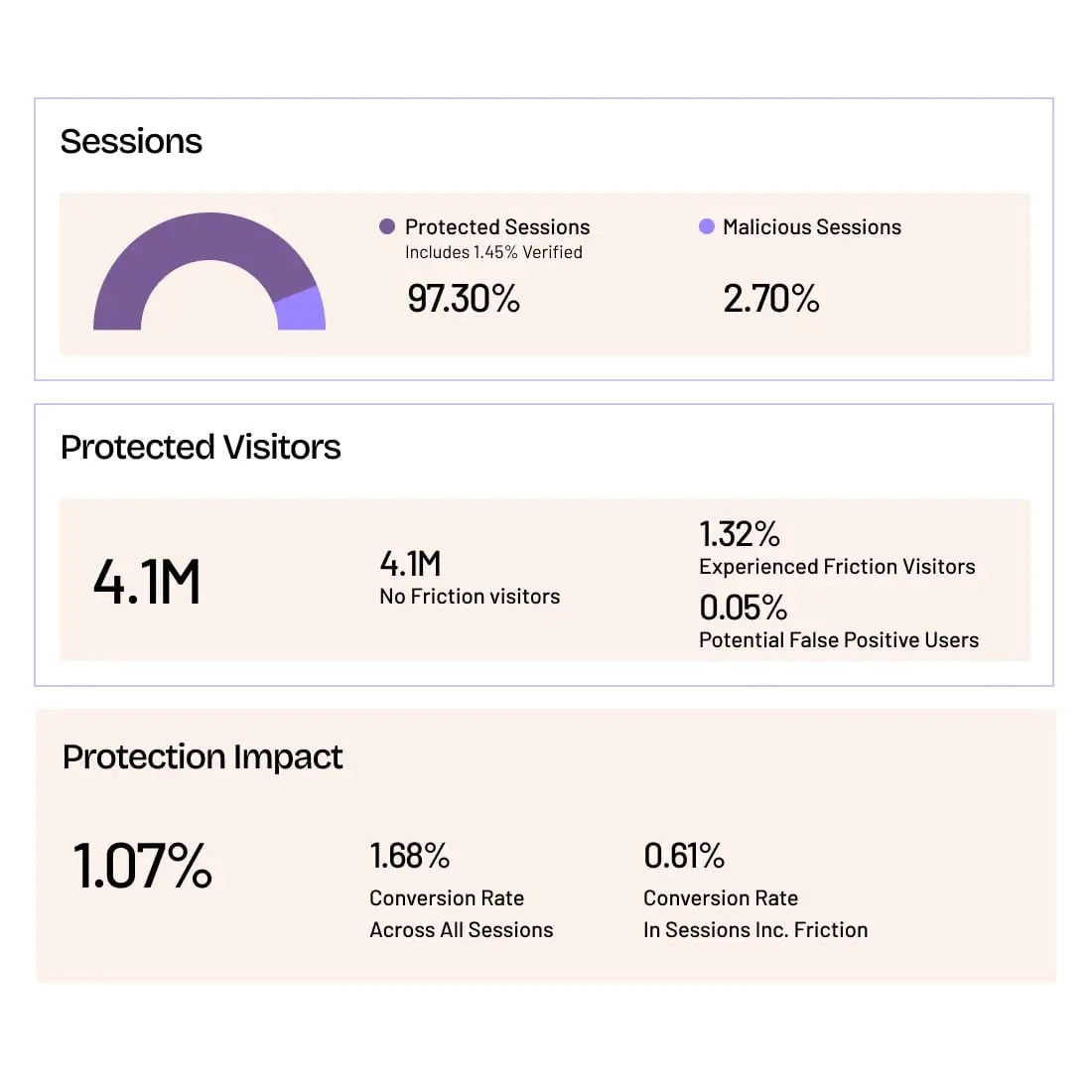
Grow with Confidence
HUMAN Sightline protects every touchpoint in your customer journey. Stop bots and abuse while keeping real users flowing through without added friction.
Grow with Confidence
HUMAN Sightline protects every touchpoint in your customer journey. Stop bots and abuse while keeping real users flowing through without added friction.