HUMAN’s Iris Report: Marketers’, Agencies’, and Consumers’ Perspectives on Agentic Commerce
1. Introduction
Agentic artificial intelligence promises to transform digital commerce, especially during the busiest shopping season of the year.
This holiday season, as consumers juggle gift lists, price comparisons and shipping deadlines, agentic AI can step in as a tireless concierge: scanning inventory, weighing reviews, applying discounts and completing purchases on behalf of the user.
No longer confined to chatbots or recommendation widgets, these autonomous agents will negotiate with sellers, optimize for budget and delivery windows, and even secure limited-edition items as they emerge. Agentic commerce is not just automation: it’s an emerging operational fabric where autonomous agents perceive, decide, act, and self-improve while remaining governed and auditable.
In October and November 2025, HUMAN surveyed 103 senior brand and agency marketers alongside a nationally representative sample of more than 2,300 consumers to understand how ready both sides are to embrace this new paradigm. Marketers are keenly aware that agentic AI can accelerate conversions, personalize experiences at scale and reimagine the customer journey. Yet just one in three senior marketing leaders feel familiar with the concept of agentic commerce, and many lack confidence that their current analytics stacks can distinguish between human, bot and agent-driven traffic. As holiday shopping ramps up, this presents a significant missed opportunity for marketers.
Consumers, meanwhile, are warming to the idea of AIpowered shopping assistants. Although only 11 percent used AI to make purchases for the 2024 holidays, nearly two-thirds plan to delegate holiday shopping in 2025, and three-quarters would entrust an AI agent with entire transactions. Interest peaks for routine gift categories like household essentials and toys, while higher-value items evoke greater caution.
Agentic commerce promises to become a defining feature of digital retail in 2026 and beyond. As AI agents learn individual preferences, synchronize across devices and integrate seamlessly with payment and delivery services, shopping will shift from a human-driven chore to a delegate-and-refresh cycle. Brands that invest now in education, analytics and governance will be best positioned to capture the loyalty, lifetime value and operational efficiencies that lie ahead.
2. Survey Methodology and Demographics
The findings in this report are taken from two surveys, one fielded to 103 senior brand and agency marketers, and one fielded to 2,344 consumers. These surveys were managed by HUMAN’s partners The 614 Group and Go Fish Digital in October and November 2025.
Brand and Agency Survey
Survey respondents were asked whether they worked for an agency, for a brand, or for neither. Respondents who did not work for a brand or agency were excluded from the remainder of the survey.
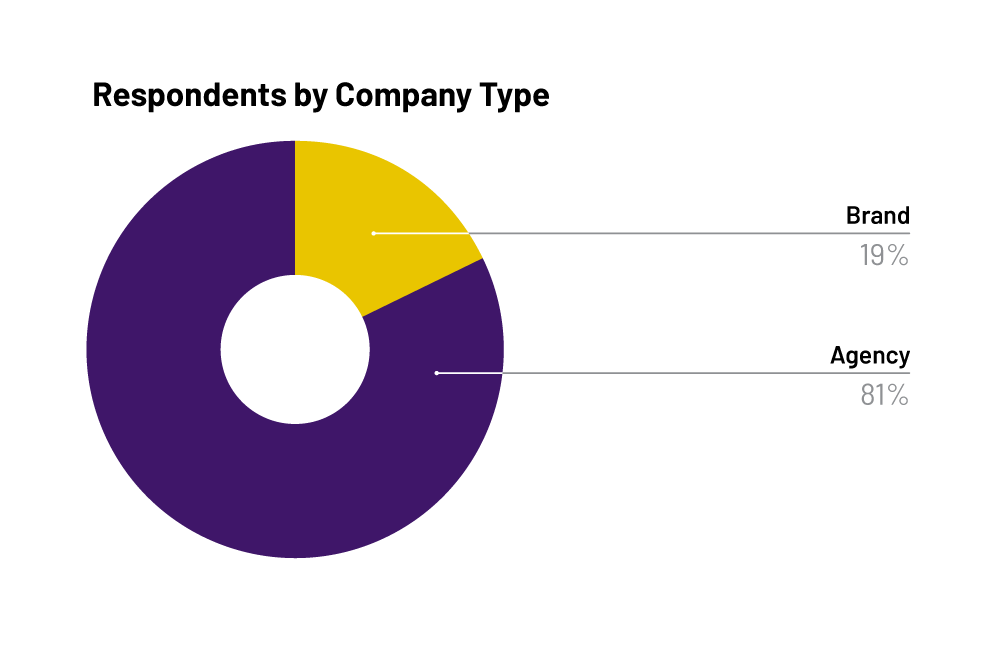
Figure 1: Percent of respondents’ self-identified company type.
Results from these respondents in this report are generally presented as a whole, unless the responses show a fundamental difference in perception or understanding.
The survey sent to senior brand and agency marketers asked respondents if they were familiar with the concept of agentic AI. Respondents who expressed no or very limited familiarity with the technology were excluded from the remainder of the survey.
That question itself provides a compelling cross-section:
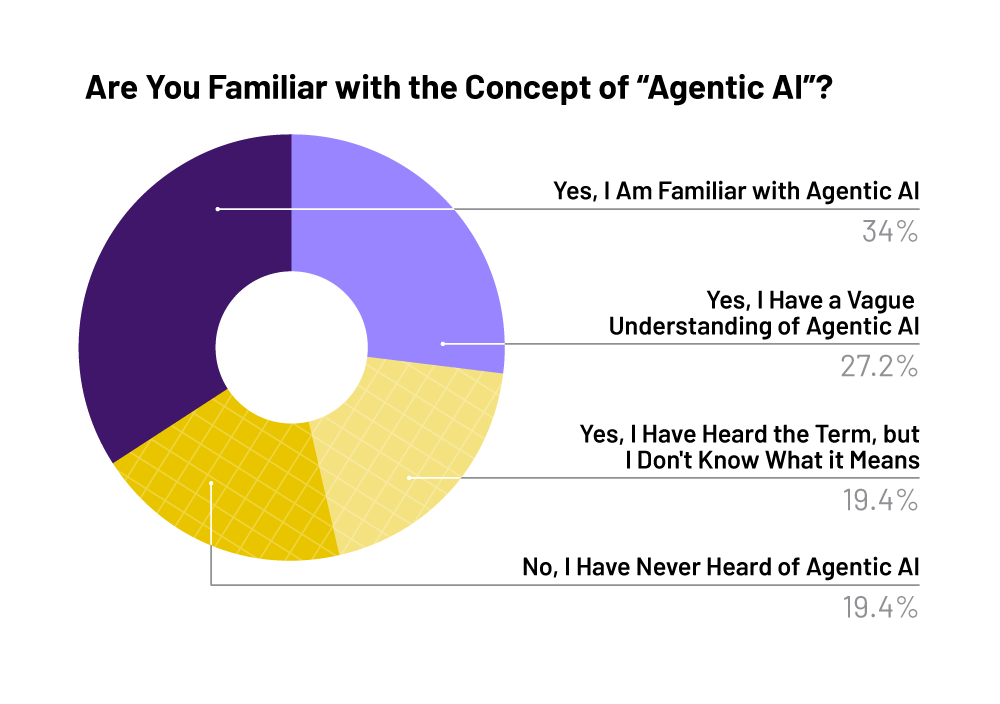
Figure 2: Respondents’ awareness of agentic AI. (Respondents with no familiarity or only passing knowledge were excluded from the remainder of the survey.)
Nearly 20% of the initial pool of respondents to the survey were entirely unfamiliar with the concept of agentic AI, and an additional 20% had heard the term but weren’t familiar with what the technology meant. All told, two in five of the 103 senior marketers surveyed were disqualified from the remainder of the survey for an unfamiliarity with agentic AI, which in turn reflects the speed with which agentic technologies are developing. The remainder of the survey was completed by 63 senior brand and agency marketers.
Consumer Survey
The consumer survey asked American consumers their past habits and future intentions for using AI as an aid in holiday shopping. This included both the use of large language model (LLM) tools and agentic tools. The results in this report will reflect both, but will identify when the questions asked centered on LLM tools rather than agentic tools.
Many of the questions centered on consumers’ reactions to their planned or past use of AI tools for gift planning, broken out by cohorts like age, gender, and state. These are broken out in a blog post, while this report will largely focus on aggregated responses.
3. Executive Summary
Agentic AI—autonomous software agents capable of making decisions and executing tasks—promises to reshape the future of digital commerce.
In October and November 2025, HUMAN partners surveyed 103 senior brand and agency marketers alongside a nationally representative sample of more than 2,300 American consumers to gauge both industry preparedness and consumer willingness to delegate purchases to AI agents.
The research reveals a striking awareness gap among marketing leaders: two in five admit they lack any meaningful familiarity with agentic AI, even as 76% of brand and agency respondents plan to optimize marketing strategies for AI. While most teams already employ standard web analytics and bot-fraud detection tools, less than half are confident their current toolkits can distinguish human, bot, and agentic traffic.
Marketers view accelerated conversions via AI-agent– specific purchase paths as the chief opportunity, yet they voice strong concerns about wasted ad spend on non-converting agent sessions, data integrity issues, and brand-safety risks. Ownership of agentic traffic monitoring is also fragmented: analytics and marketing-science teams lead 38% of respondents’ efforts, digital performance and media operations 24%, and 19% report no clear owner.
On the consumer front, only 11% used AI for holiday shopping in 2024, but 64% plan to do so for 2025 purchases, with nearly three-quarters comfortable delegating entire transactions to AI-powered browsers. Consumers show greatest openness to routine purchases—household goods and toys— while high-ticket categories remain more cautious.
Together, these findings underscore both the promise and the pitfalls of agentic commerce. Brands must accelerate internal education, establish clear ownership of AI-agent monitoring, and refine analytics to distinguish and optimize agentic traffic. At the same time, safeguarding data integrity and brand reputation will be critical to unlocking the substantial conversion and loyalty benefits that lie ahead.
4. Brand and Agency Perspectives on Agentic Commerce
Continued growth of agentic commerce may have a greater impact on brands and agencies than on any other group.
Consider that as the technology develops and consumers become increasingly familiar and eager to adopt these tools, brands and agencies will need to adapt to this new mechanism for informationgathering and purchasing. Agents navigating brand websites and e-commerce platforms will have immense impacts on media performance, conversion rates and attribution, user experience, and competitive opportunities, all major areas of focus for marketers. Not to mention the complexities of both marketing to and measuring the traffic of a population of AI-powered agents. Naturally, many senior marketers at brands and agencies have a muddled view of how (or even whether) they’re seeing agentic traffic today, and if so, how.
Visibility, Management, and Toolkits Today
Respondents were asked how confident they were that their organizations could identify and distinguish human web traffic from bot or AI agent web traffic today, with the tools they have in place.
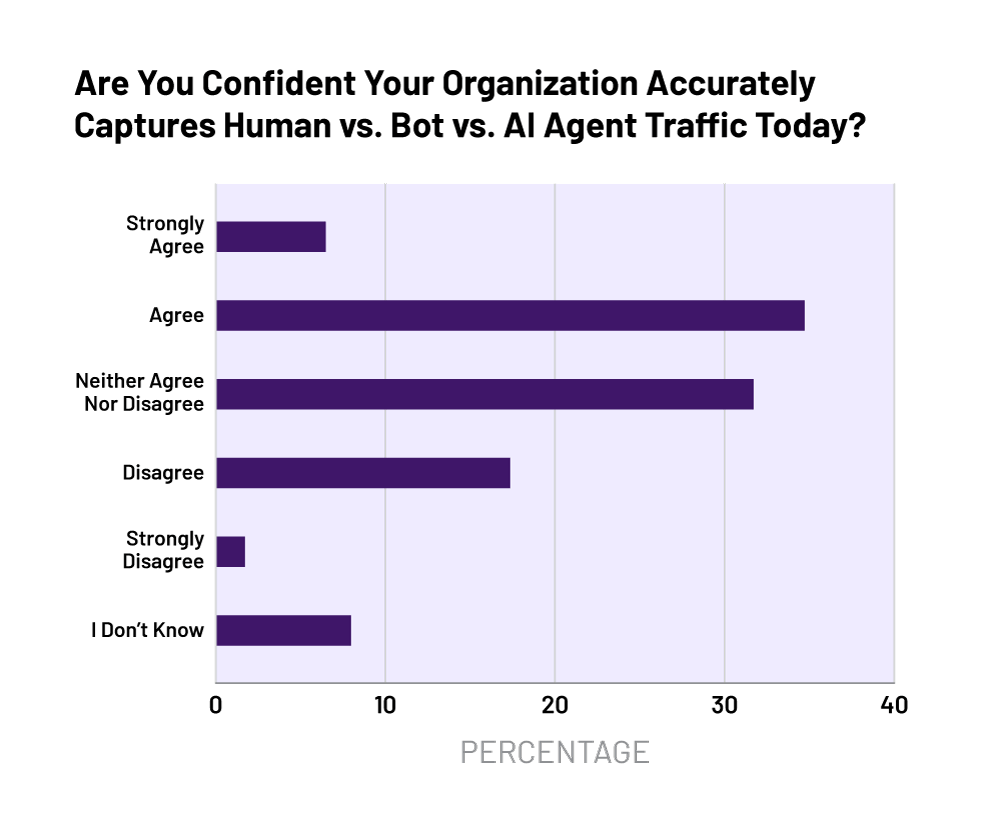
Figure 3: Respondents’ confidence in their organizations’ ability to capture human, bot, and AI agent traffic accurately.
The biggest takeaway from this chart is that less than half of the marketers surveyed felt confident their organization could accurately identify these three cohorts of web traffic.
Marketers will struggle to optimize their campaigns and properties for agentic AI if they can’t be confident about how much traffic this new type of session is arriving.
Respondents were also asked what tools they were using or planning to use to measure traffic from AI agents:
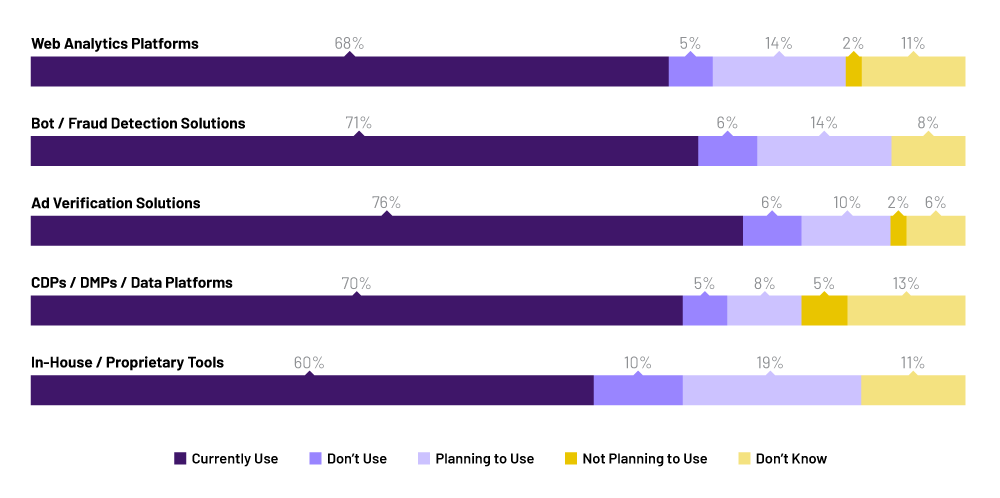
Figure 4: Respondents’ current and planned use of various tools for measuring agentic AI traffic. (Respondents chose one usage answer for each tool.)
Predictably, every suggested tool was in current use by the majority of respondents. Where the data gets particularly interesting is where surveyed marketers had plans to use tools in the future or where they didn’t know about a given tool’s use or plans:
- One in seven respondents plan to—but don’t currently—use bot/fraud detection solutions to identify agentic AI traffic. This is a natural fit, as these tools are equipped to spot automation, and major AI agents should demonstrate automation that can be easily identified by these tools. This is in addition to the nearly 71% of respondents who reported already using these tools for this purpose.
- Nearly thirteen percent of respondents don’t know if their content delivery platform (CDP) or data management platform (DMP) is capturing metrics from agentic traffic.
Finally, the management of agentic AI is an open question for many organizations:
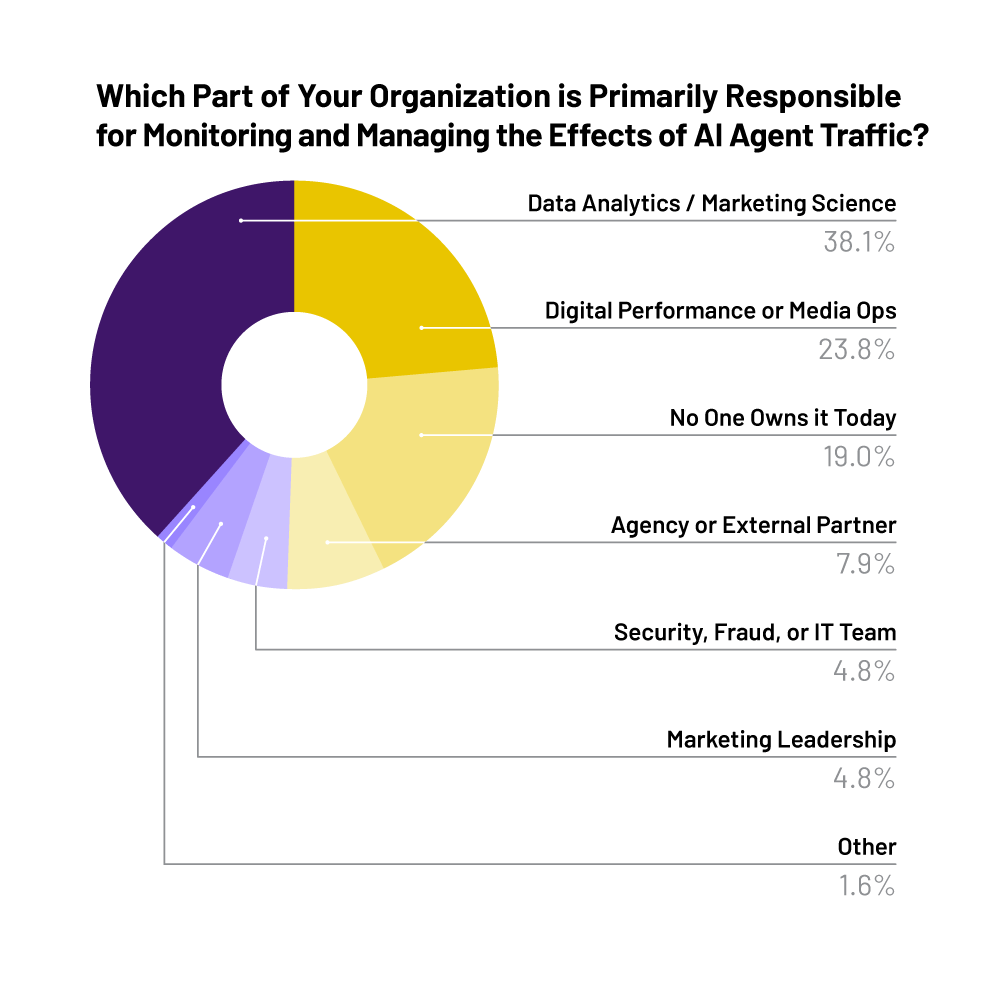
Figure 5: While the data analytics/marketing science team was the plurality opinion for AI agent ownership, several other teams had significant response rates.
Though the data analytics/marketing science team logged a plurality of responses—38%—the digital performance/media ops team also logged a solid 24% of responses, and almost one in five respondents reported that the idea of monitoring and managing agentic traffic has no one owner today.
In reality, managing this emerging traffic and revenue source is likely a team sport, in which members from all of the teams named above come together to contribute to policy definition and implementation. Agentic commerce promises to change how the internet operates, and it’s going to take a collaborative effort to respond and adapt to the idea.
Opportunities and Concerns About Tomorrow
Agentic traffic, however, does excite and concern marketers in equal measure. Asked to choose the top opportunity agentic traffic poses to their business, respondents largely agreed:
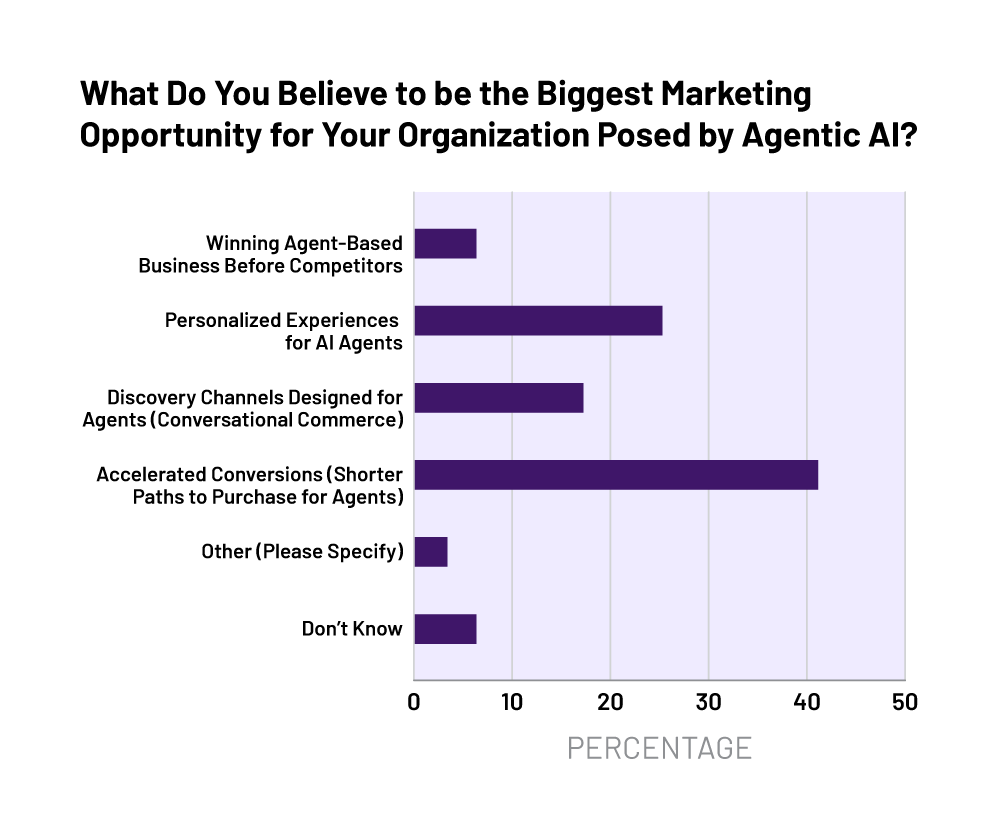
Figure 6: Respondents largely agreed that accelerated conversions were the top agentic AI-related marketing opportunity for their organization.
A solid plurality of respondents—41%—named accelerated conversions and dedicated paths to purchase for AI agents as the top agentic AI related opportunity for their business. Personalized experiences for AI agents was a distant second with roughly 25% of respondents choosing it.
Respondents selecting “Other” reported that “realtime market analysis” and “knowing how to reach humans” were the top goals they hoped to achieve with agentic AI.
Flipping the question and asking for three top concerns also revealed a general consensus, but with other concerns ranking prominently:
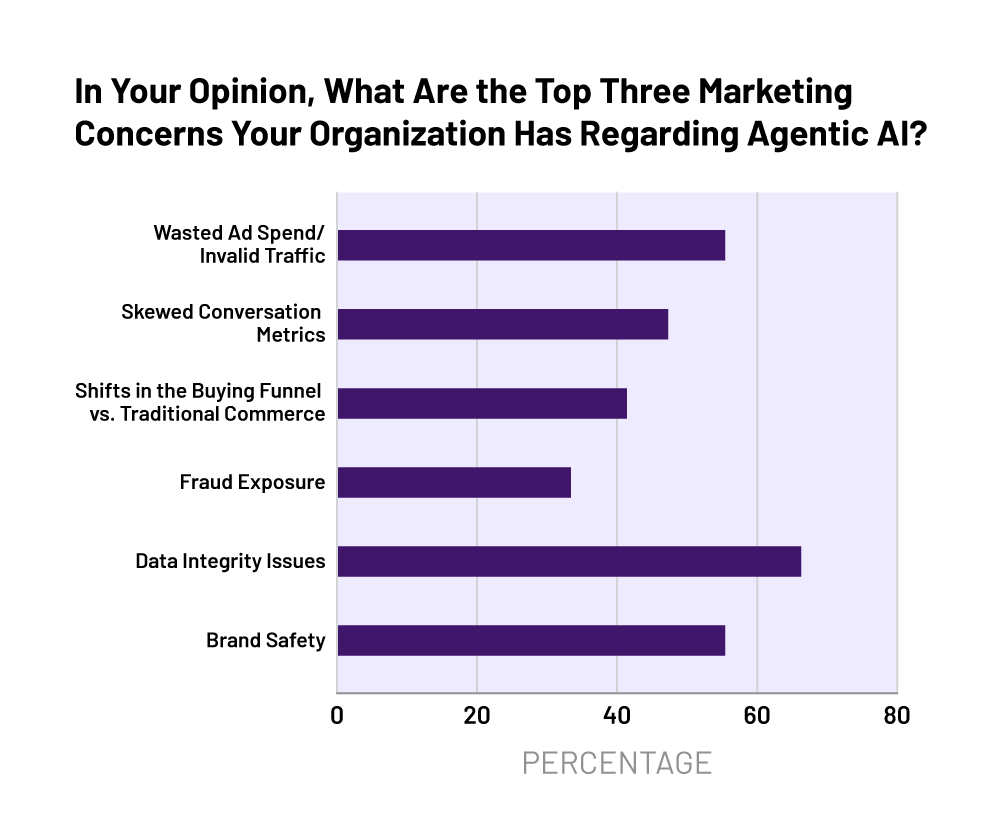
Figure 7: Three agentic AI-related concerns all ranked highly with a majority of respondents, but other concerns registered as well. (Respondents could choose three concerns.)
Respondents’ concerns of ad spend being wasted on AI agent-based sessions that can’t or won’t convert is an understandable one, but for the same reason that two-thirds of respondents were already using fraud detection tools to identify IVT, this concern is overblown: the technology underpinning those tools reliably identifies automation, and the commercially available (and consumer-friendly) AI agents all self-declare.
The brand safety-centric concerns are also worth exploring. The perceived threat model at play here is unclear: is it a conflation of LLMs and agentic technology, in turn reflecting a confusion over whether prominent LLMs will welcome advertising in the future? Is it a perceived lack of control of how agents will—or won’t—receive their content? Is it about the idea of untrusted agents in addition to the trusted ones? Or is it another fear entirely?
Planning for an AI-Driven Future
Finally, respondents were asked about their plans and timelines for optimizing their marketing strategies and/or websites for AI. Perhaps predictably, the vast majority have AI on the mind:
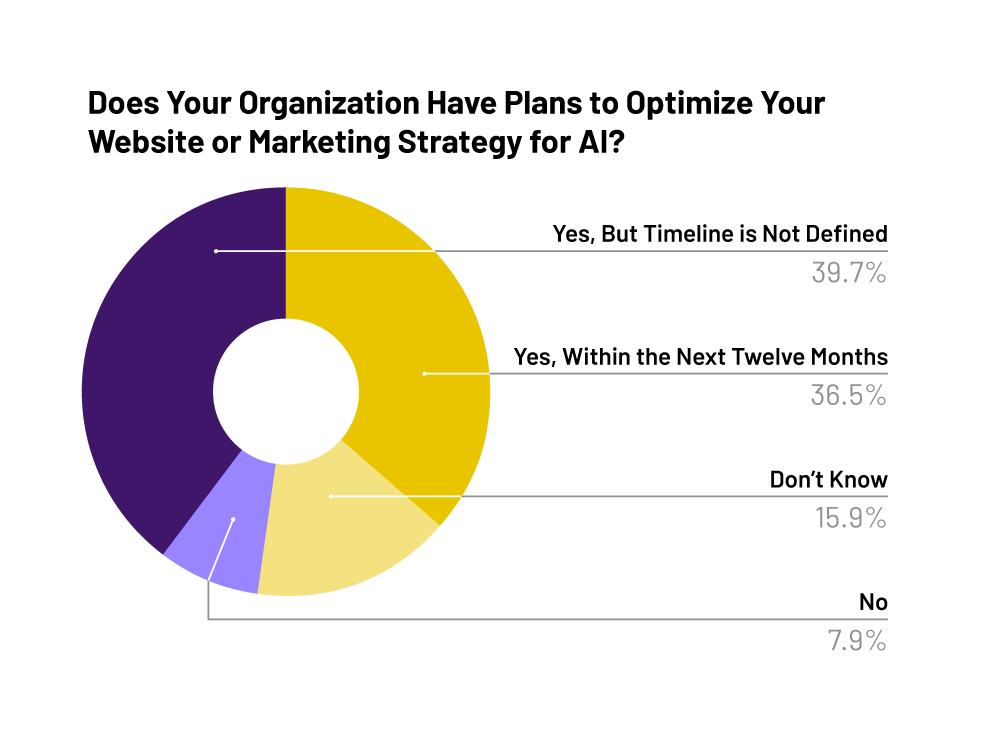
Figure 8: Nearly 80% of respondents have plans to optimize their websites or marketing strategies for AI, and 36% plan to do so within the next twelve months.
If the discourse is to be believed, it’s surprising as many as 8% of respondents’ organizations don’t have plans to accommodate AI in their website or marketing strategy planning.
5. Consumer Perspectives on AI and Agentic Commerce
On the other side of the equation are the buyers. They’d be, after all, the humans instructing the agents to go out and make those buying decisions and purchases. How much are consumers truly considering using AI to handle some of the burden of deciding and executing on a purchase?
The survey fielded to consumers focused on the ways in which consumers used or didn’t use AI to aid in their holiday shopping in 2024 and how/whether they will in 2025. The vast majority of consumers reported that they did not use AI—in either generative or agentic form—for their holiday shopping in 2024.
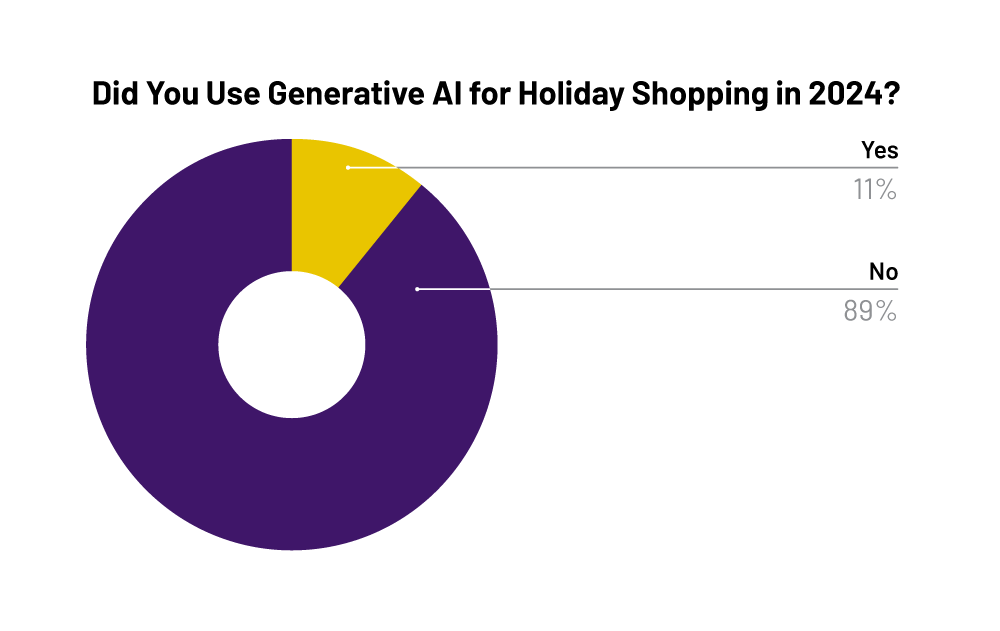
Figure 9: Consumers overwhelmingly did not use AI for holiday shopping in 2024.
That’s a whopping 89% of consumers that didn’t use AI for shopping assistance only 12 months ago. But the field is evolving fast, and attitudes have changed quickly.
Consumers’ Impressions of AI for Shopping
Despite the broad disuse of AI for holiday shopping last year, consumer attitudes have become strikingly more welcome and receptive to the idea of AI being a component of their shopping experience in 2025, both giving and receiving.
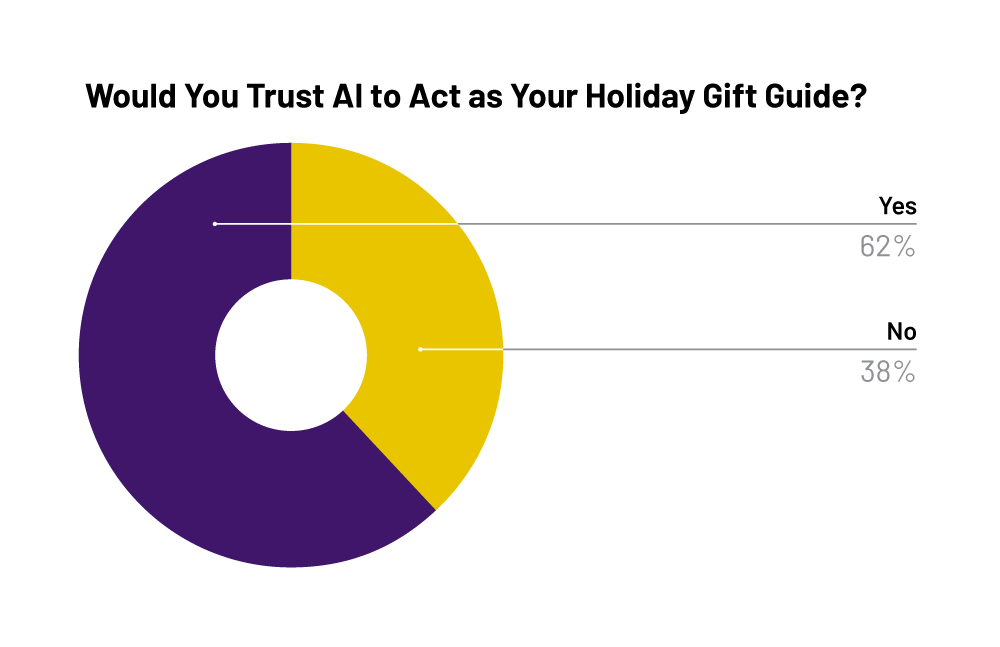
Figure 10: More than 60% of consumers would enlist AI to help come up with holiday gift ideas.
A significant majority of consumers—62%—polled were willing to entrust AI to function as a holiday gift guide or brainstorming tool. And most consumers felt, too, that receiving an AI-suggested gift was totally okay:
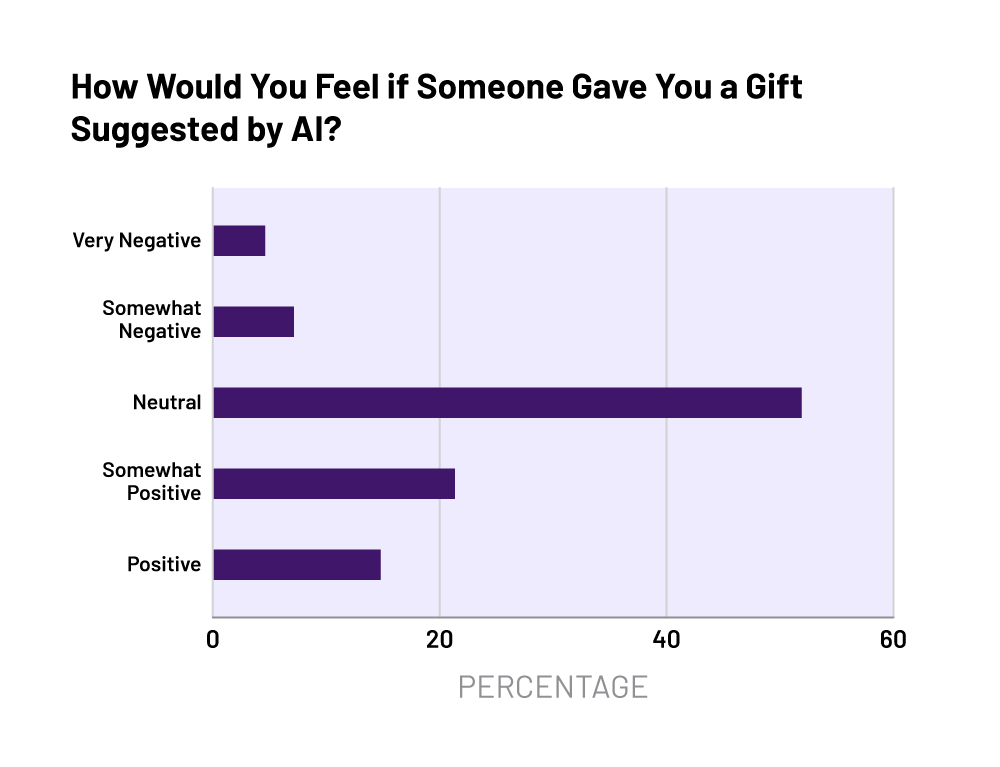
Figure 11: Nearly 9 in 10 consumers were neutral or positive toward the idea of receiving an AI-suggested gift.
A whopping 88% of consumers were neutral at worst about the idea of receiving an AI-suggested gift, but these numbers slip a bit with younger demographics. While the sample as a whole pegged the two “negative response” boxes at 12%, Gen Z’s rate of disapproval of AI-suggested gifts came in at 20%.
Indeed, most consumers would prefer gifts suggested by AI to gifts from generic online gift idea lists:
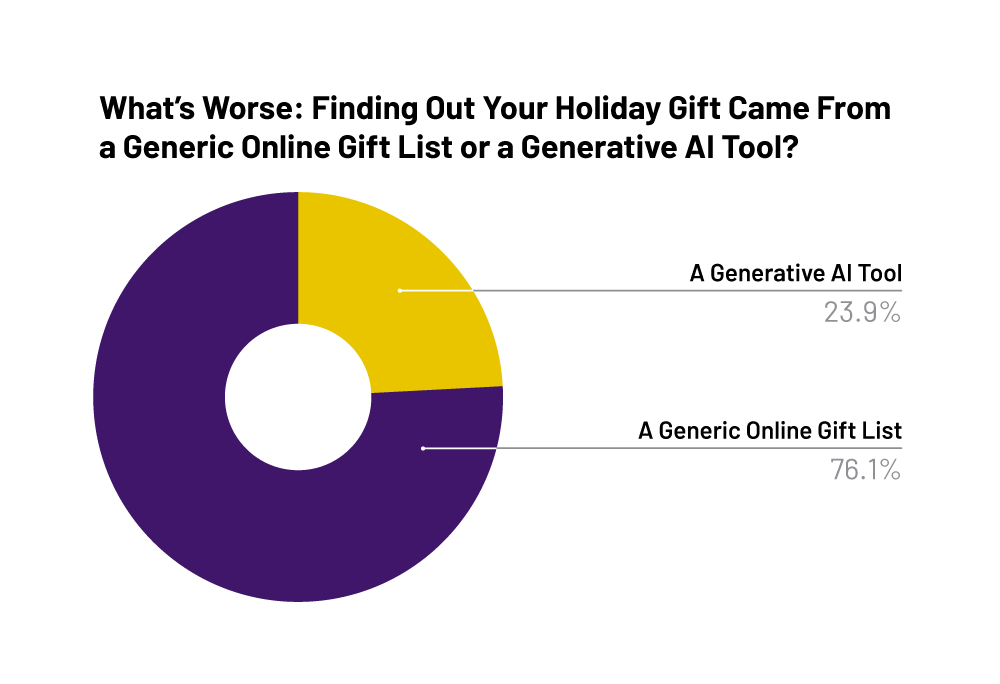
Figure 12: Respondents greatly preferred AI-suggested gift ideas to generic list-based ideas.
Here too, the youngest generation expressed more trepidation. While the overall sample had only 24% of respondents naming AI as the less preferable option, Gen Z respondents named it as the less preferred option 37% of the time. Nonetheless, that still leaves almost two-thirds of young respondents who didn’t object to an AI-suggested gift.
In general, consumers are open to the idea of AI being a key part of their holiday shopping experience.
Comfort Levels with AI
Consumers’ comfort level with potential applications of AI in holiday shopping manifested in a couple interesting ways:
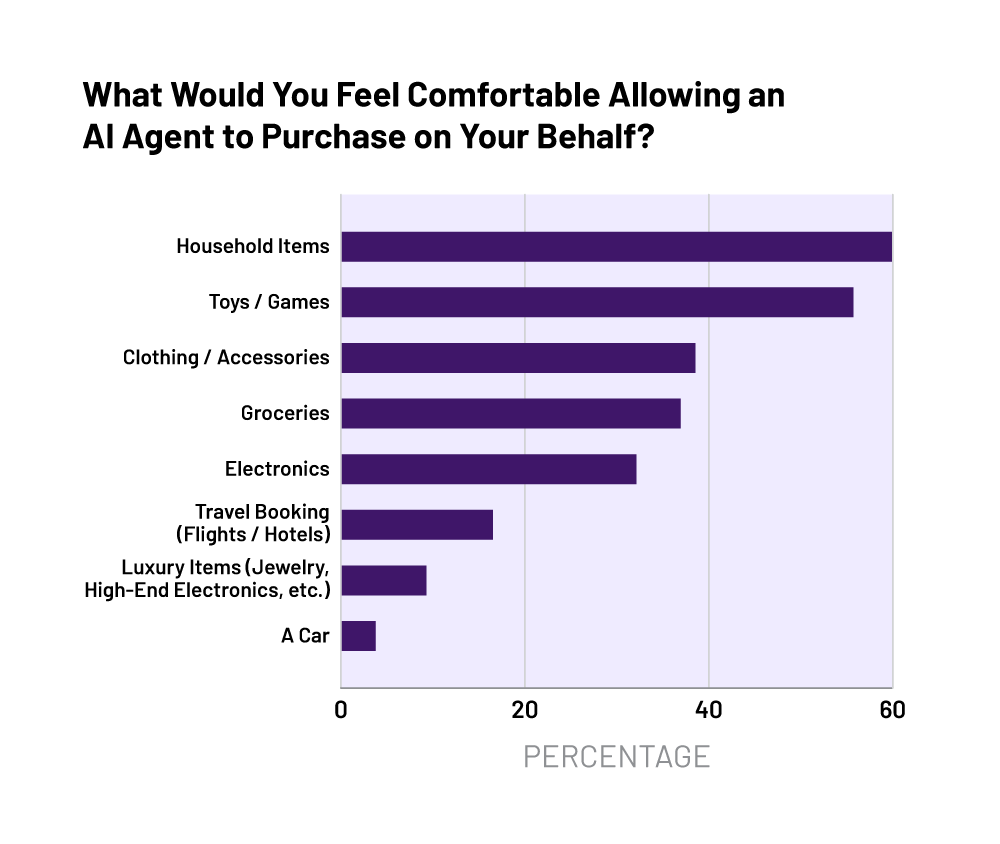
Figure 13: In general, consumers were willing to let AI purchase small items at greater proportions than large ones. (Respondents could choose more than one item.)
It’s unsurprising that consumers considering using AI to make purchases for the first time might limit their options to small or easily-instructed choices. Outright majorities of respondents said they’d allow AI to purchase household items—60%—or toys and games—56%—for them, while clothing, groceries, and electronics also registered reasonable percentages. Higher-ticket items, like travel, luxury items, and vehicles, came in a bit lower.
On a similar note, here’s how respondents answered a question about how much they’d allow an AI agent to spend on their behalf:
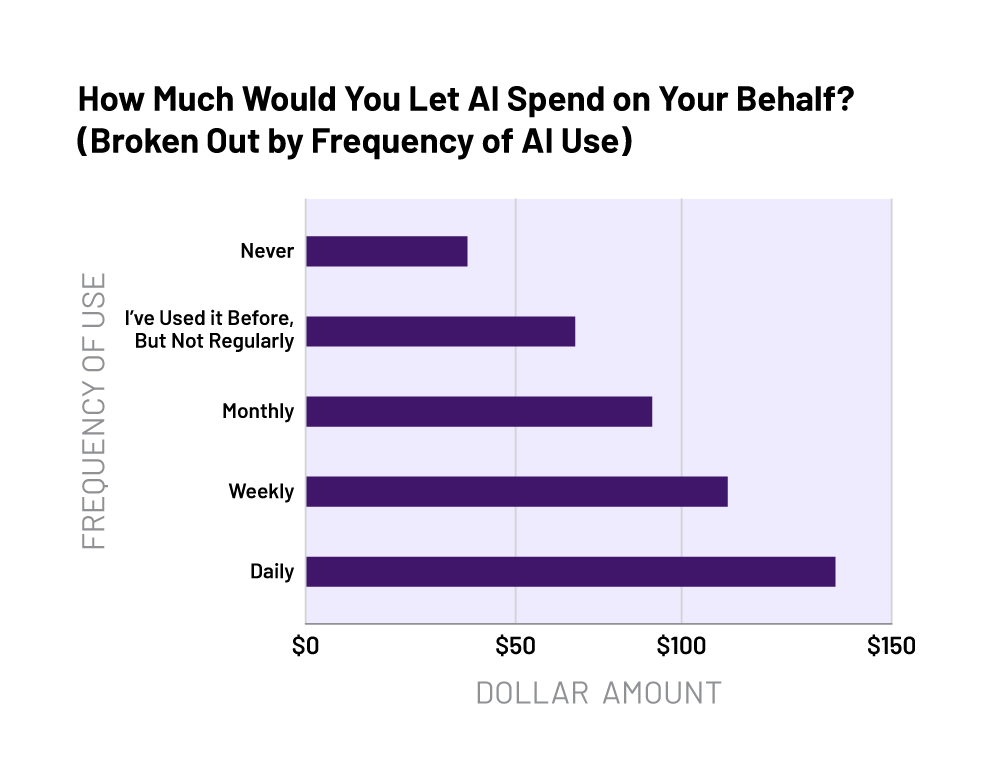
Figure 14: Frequent users were the most willing to allow an AI agent to spend on their behalf. (Note: some extreme outliers were removed from the data in the above.)
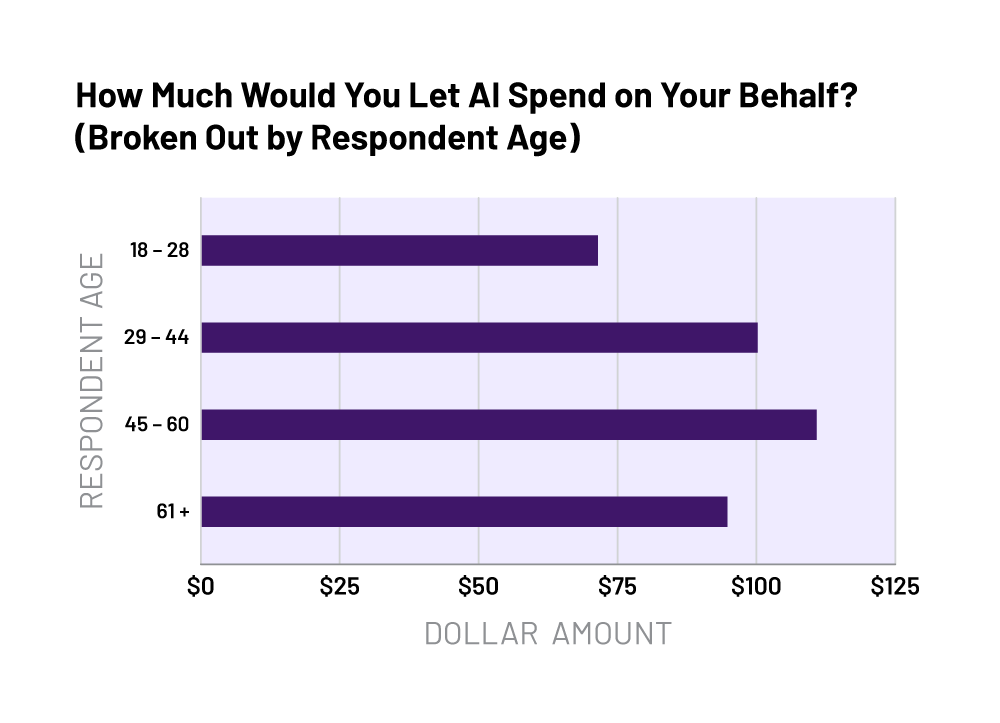
Figure 15: Gen X users were the most willing to allow an AI agent to spend on their behalf. (Note: some extreme outliers were removed from the data in the above.)
There’s a fairly clear familiarity curve between AI tool use and the amount of money respondents were willing to let AI agents spend on their behalf – the more frequently AI was used, the more money was “available.” And the earlier reluctance of younger people to interact with AI was similarly borne out in the dollars they’d let an agent spend.
AI Plans for Holiday Shopping 2025
Finally, consumers were asked both whether they’d be willing to use an AI-powered browser that used agentic technology to make purchases for them, and whether they planned to use AI in their holiday shopping for 2025.
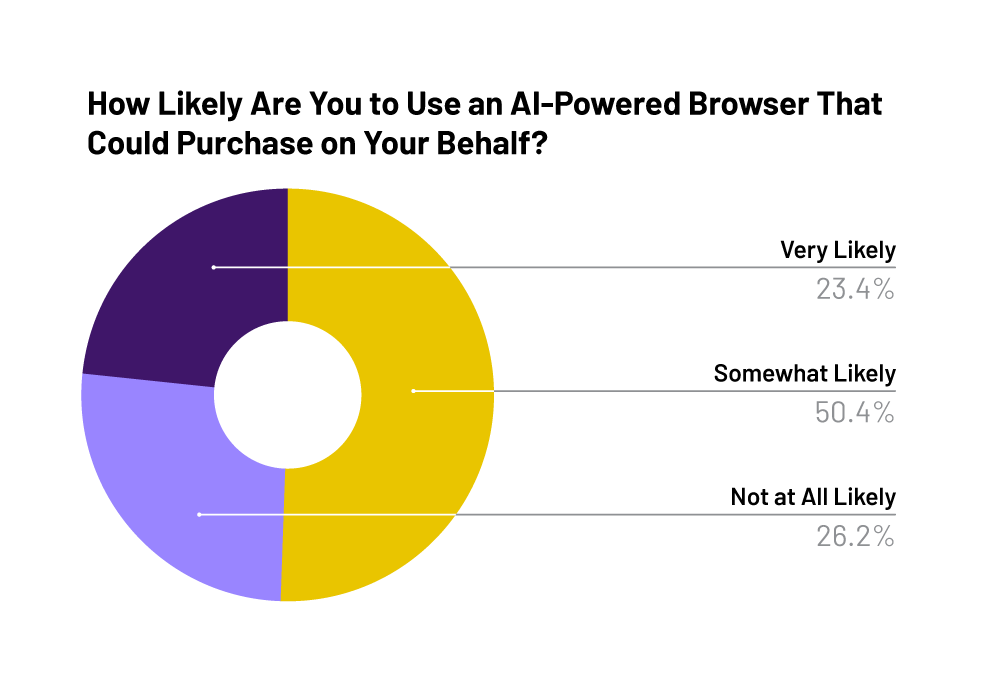
Figure 16: Nearly three in four consumers were at least willing to consider using an AI-powered browser that could purchase on their behalf.
This is the core of the “will consumers adopt agentic technologies” question that many brands and agencies are asking right now, and the answer is a resounding yes. Nearly one in four respondents called themselves very likely to use such a browser, and another half of the respondents were willing to consider it. Only a quarter of the more than 2,300 consumers polled were fully disinterested in agentic browsers as a concept.
Finally, looking at the broader use of AI (including both agentic and generative/LLM tools) for holiday shopping assistance, the number of respondents willing to consider its use jumped dramatically since last year:
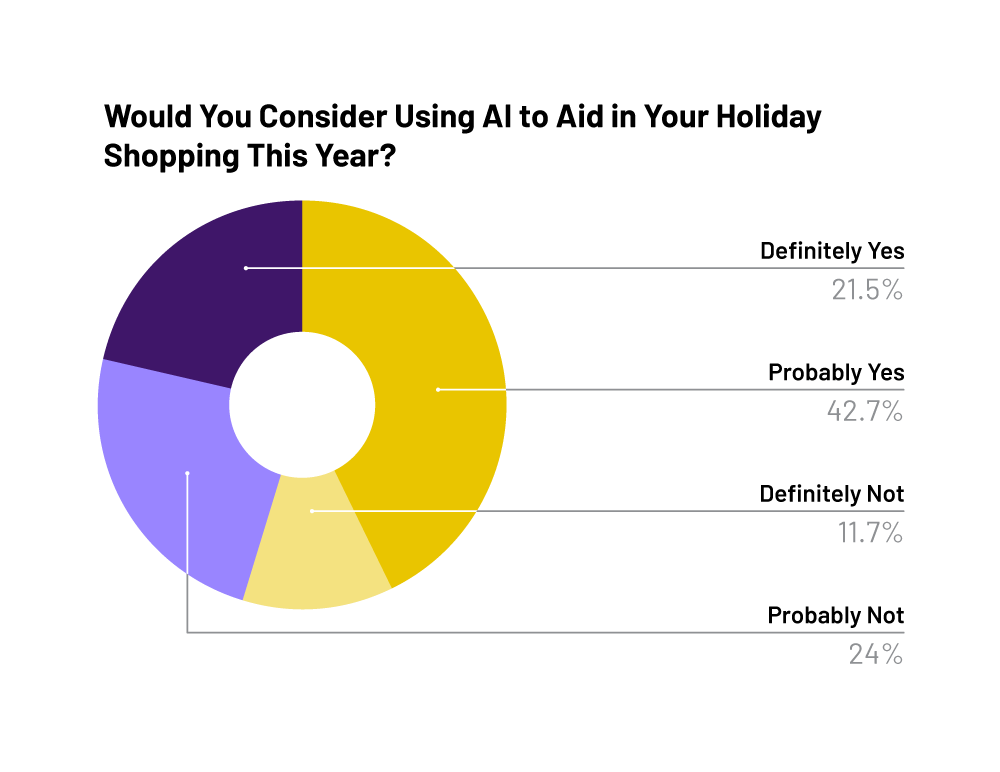
Figure 17: More than three in five consumers will probably or definitely use AI in their shopping this year.
In a direct comparison to last year’s 11% who used AI in their holiday shopping, a massive jump up to 64% of consumers polled will or likely will use AI in their shopping this year, with an additional 24% who don’t rule it out entirely.
6. Looking Forward
The data is clear: consumers planned to use AI in far greater numbers for 2025 holiday shopping than they did for 2024.
Paired with massive jumps in the use of agentic AI— HUMAN observed a more than 6,900% jump in agentic sessions in the span of only a few months in 2025—and consumers’ willingness to explore allowing AI agents to make purchases on their behalf, there’s an agentic commerce boom coming very, very soon.
Brands and agencies that aren’t adequately prepared for this boom are poised to lose out on a significant opportunity. Agents are less likely than humans to return to a brand that blocked the session, and agents are far more likely simply to pivot to a competitor to complete the intended purchase. HUMAN researchers have observed LLM scrapers visiting websites in advance of AI agents, confirming that the information requested is available and relevant. Brands that block that LLM scouting party will also be missing out on the agent that follows it.
Within the next three years, tons of consumer purchase journeys—planned or spontaneous—will begin with an autonomous agent. The brands that win will be those that not only welcome agents but actively optimize for them with guardrails, transparent intent signaling, and secure collaboration.
HUMAN’s AgenticTrust gives brands and agencies the capability to see which agents are interacting with their websites and define the actions those agents can and cannot take, enabling marketers to protect their brands’ integrity, gain valuable context into a new source of valuable traffic, and shape