Satori Threat Intelligence Alert: Trapdoor Funnels Malvertising into Ad Fraud

Researchers: Louisa Abel, Ryan Joye, João Marques, João Santos, Adam Sell
IVT Taxonomy: Manipulated Behavior
HUMAN’s Satori Threat Intelligence and Research Team has identified and has disrupted an ad fraud and malvertising operation dubbed Trapdoor. The operation encompasses 455 malicious Android apps and 183 threat actor-owned command-and-control (C2) domains that together form a multi-stage fraud pipeline:
- Users unwittingly download a threat actor-owned app, often a utility-style app like a PDF viewer or device cleanup tool.
- These apps trigger malvertising campaigns that coerce users into downloading additional threat actor-owned apps.
- The secondary apps launch hidden WebViews, load threat actor-owned HTML5 domains, and request ads.
This cycle generates revenue that can fund further malvertising campaigns. Trapdoor is, essentially, a self-sustaining cycle of fraud. The use of HTML5 cashout domains as the monetization layer connects Trapdoor to a broader pattern observed by Satori researchers: the SlopAds, Low5, and BADBOX 2.0 operations all used HTML5 game and news domains as cashout mechanisms.
At its peak, Trapdoor accounted for 659 million bid requests a day, and apps associated with the threat have been downloaded more than 24 million times.
Trapdoor, which is named for the way in which an organic app install leads into a cycle of fraud, is notable for its combination of malvertising and ad fraud within a single operation. In a fashion similar to last year’s SlopAds operation, the threat actors behind Trapdoor also abuse install attribution tools (technology designed to help legitimate marketers track how users discover apps) to enable malicious behavior only in users acquired through threat actor-run ad campaigns, while suppressing it for organic downloads of the associated apps.
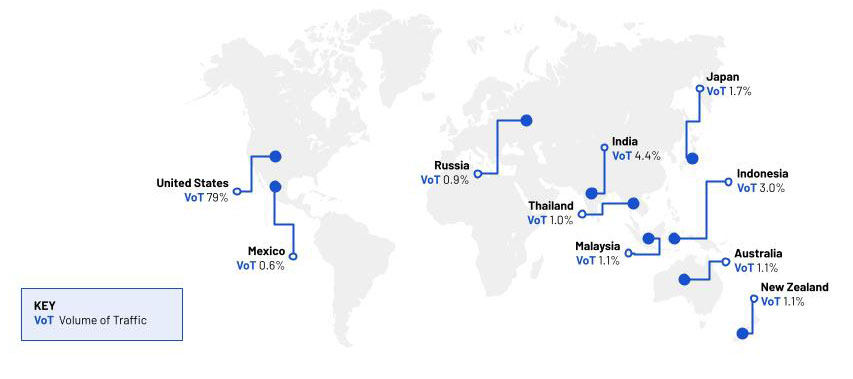
Google removed all of the identified malicious apps from Google Play and Google Play Protect automatically safeguards users from apps known to conduct Trapdoor associated behavior.
Customers partnering with HUMAN for Ad Fraud Defense and Ad Click Defense are protected from the impact of Trapdoor.
Technical Analysis
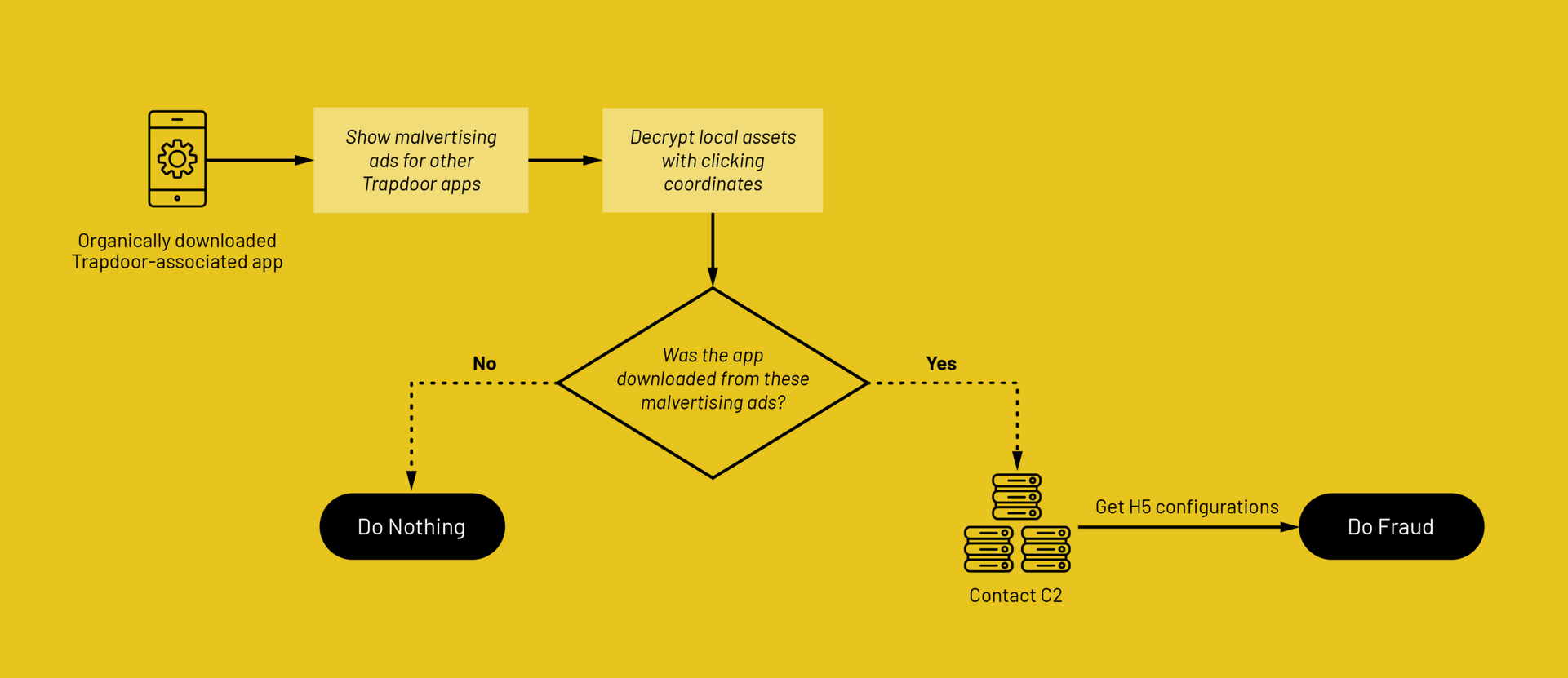
The Trapdoor threat is best understood as a pipeline with distinct stages: distribution, activation, payload delivery, and monetization. At each stage, the threat actors employ techniques designed to maximize the operation’s reach while minimizing its visibility to researchers and security tools.
How Trapdoor Spreads: Malvertising to Organic Users
Trapdoor uses a two-stage distribution mechanism: organic app installs don’t trigger fraud, but instead trigger a malvertising campaign intended to coerce a user to download a second related app. This two-stage system helps the threat actors avoid detection by limiting invalid activity to installs that are less likely to be monitored by security researchers.
Many of the apps associated with the threat claim to perform a common utility, such as PDF readers, file managers, or cleanup apps. These attract a broad user base and don’t raise immediate suspicion.
Once an organically downloaded app is installed, users begin seeing ads claiming the current version of the app is outdated or unsupported. The ads are designed to suggest that clicking on a button in the ad will update the app, but instead install a second threat actor-owned app.
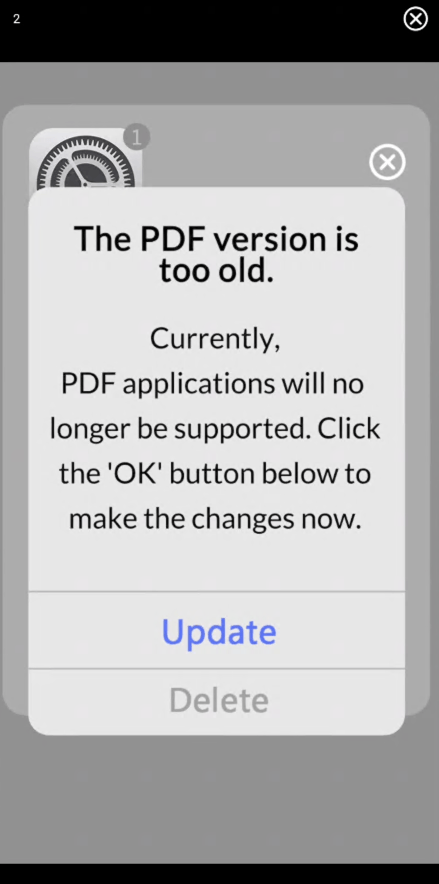
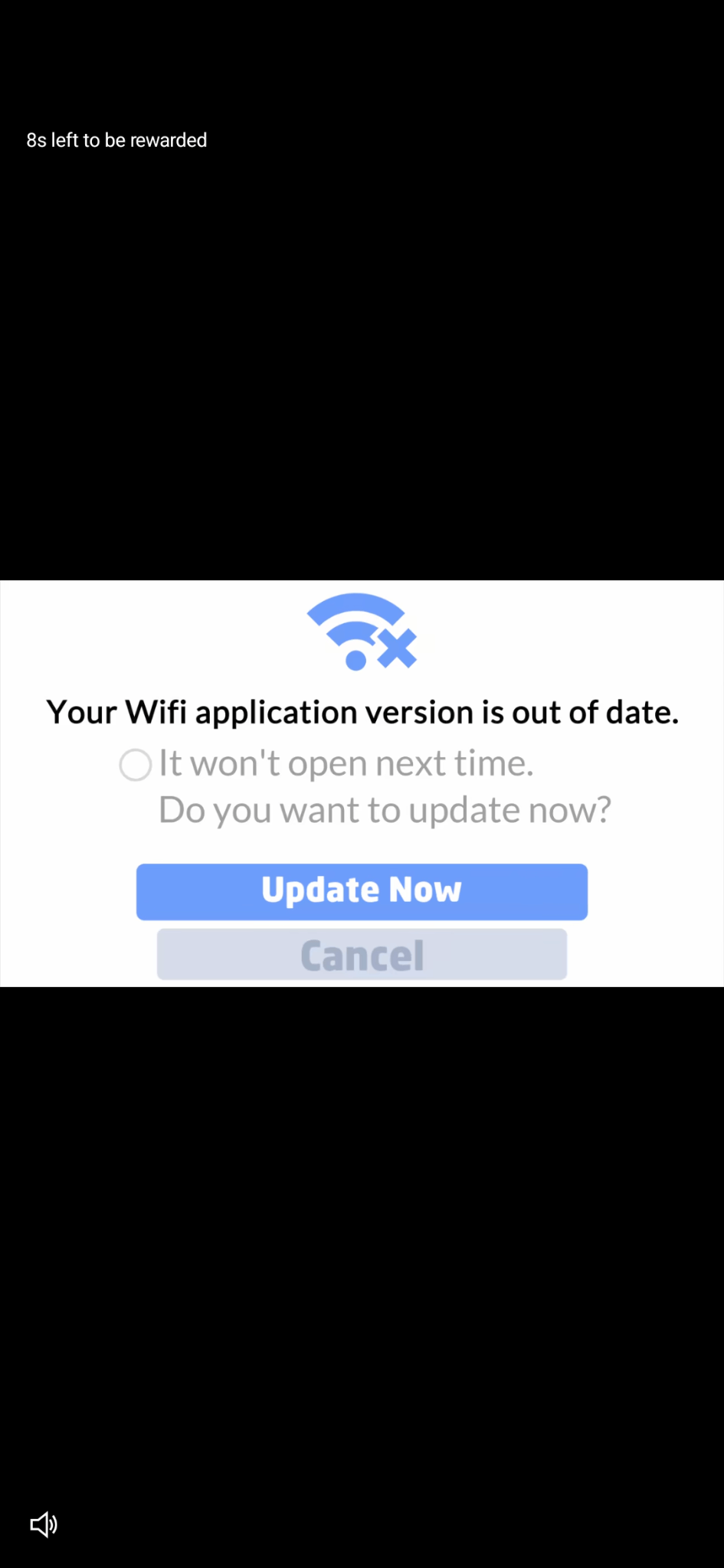
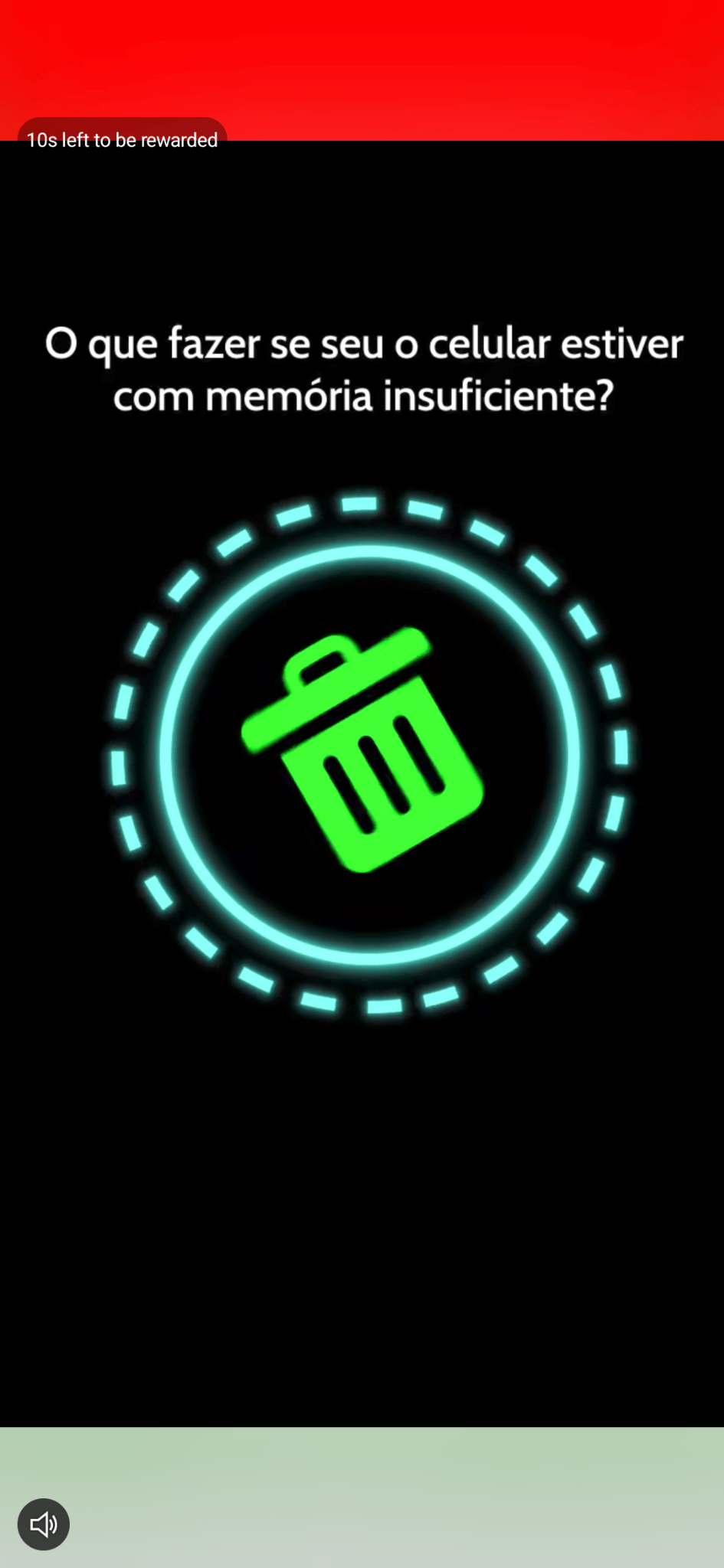
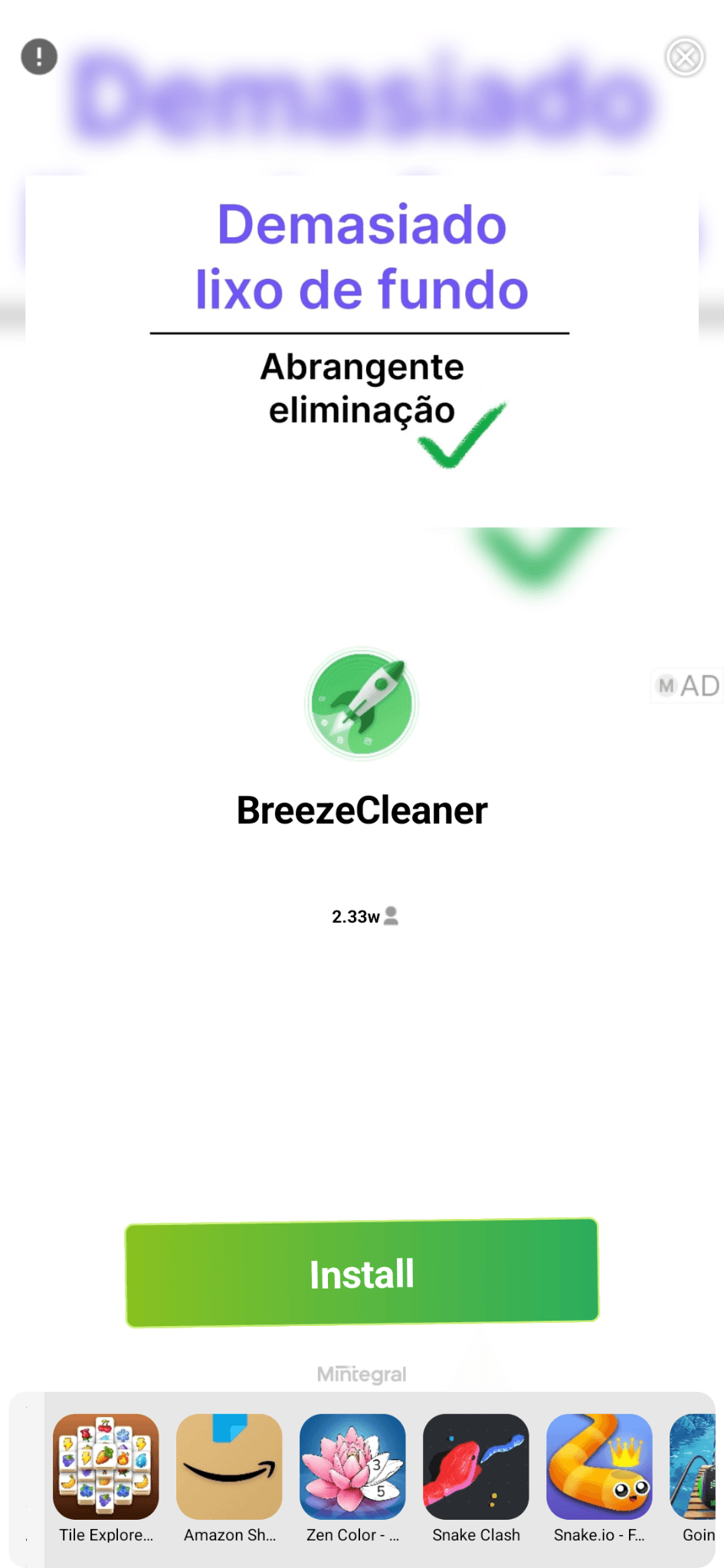
This sequence—initial organic install to malvertising campaign to secondary malicious install—suggests an ecosystem designed for users to inadvertently self-select into fraud. The fake update creative in the malvertising campaign creates urgency and exploits user trust in app update mechanisms, making users more likely to comply.
Selective Activation: Abusing Install Attribution
One of Trapdoor’s most notable techniques is its abuse of a mobile marketing attribution platform to determine whether an app was installed organically (i.e., a user visiting the Play Store directly) or non-organically (i.e., the user arrived via a paid ad campaign run by the threat actors).
Trapdoor-associated apps integrate attribution calls and inspect tracker_name values, treating installs whose tracker does not contain organic as ad-driven, which allows the threat actors to reserve malicious workflows for installs derived from their own malvertising campaigns.
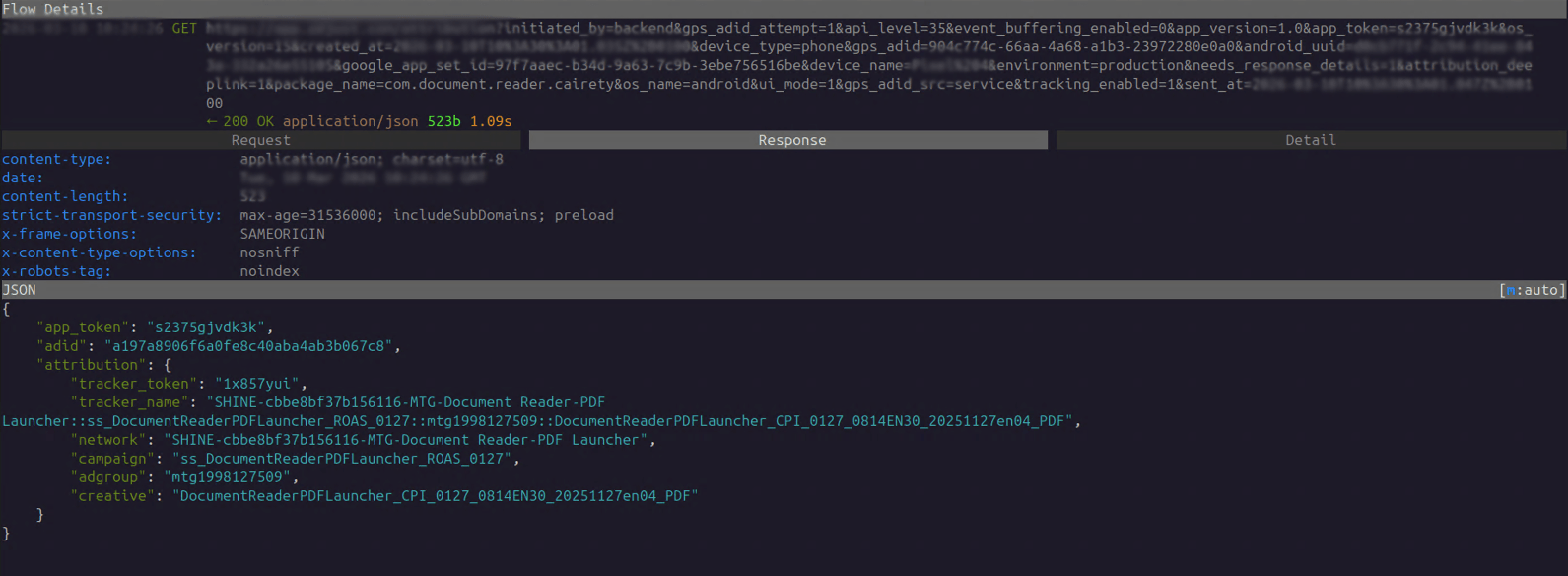
This is a potent evasion technique. A security researcher who downloads the app directly from the Play Store or sideloads it for dynamic analysis will see only benign behavior. The malicious payload activates exclusively for users who arrived through the threat actors’ own advertising campaigns. Satori researchers observed a similar misuse of attribution technology in the SlopAds operation, and its reappearance in Trapdoor underscores that threat actors have identified attribution tools as a reliable method of separating real targets from researchers who might blow the whistle.
The Payload: Automated Touch Fraud
Once a Trapdoor-associated app determines it was installed non-organically and should proceed with its malicious workflow, the threat revolves around decrypting files bundled within the app’s assets.
The initial decrypted file strings contain critical values: the C2 domain, filenames of files containing clicking coordinates, and dynamic loading payload references.
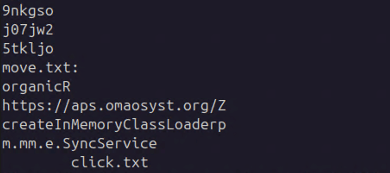
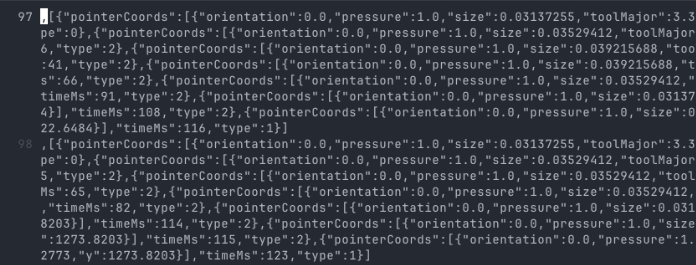
Among the decrypted assets is an encrypted ZIP archive containing two files: move.txt and click.txt. These files contain instructions and locations for taps, swipes, and more complex gestures. The data is deserialized into model classes such as TouchConfig and TouchData and executed through Android’s dispatchTouchEvent, allowing the app to simulate realistic human touch interactions on the device.
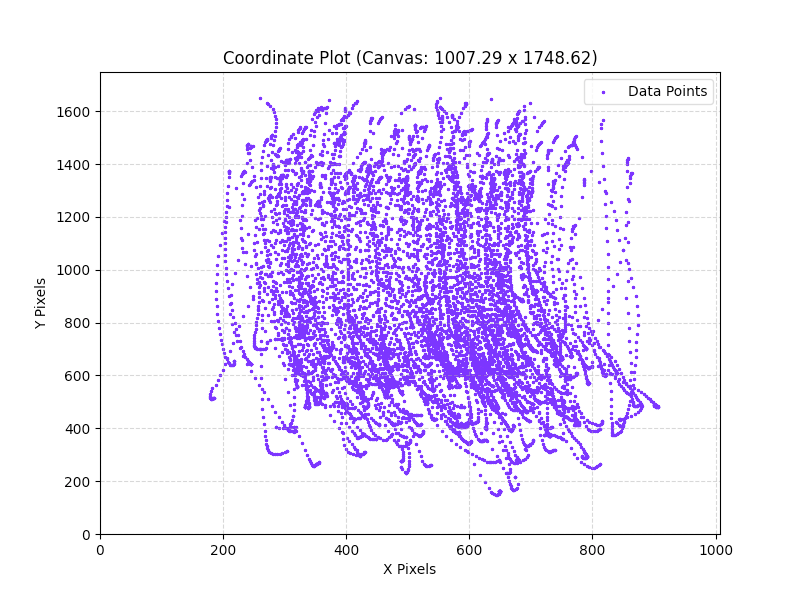
Satori researchers simulated the gesture coordinates recovered from move.txt, revealing the structured nature of the automation. The coordinate plot below shows the pre-programmed movement paths, which form deliberate, repeatable patterns: these are not random taps, but carefully choreographed gestures designed to interact with specific ad placements.
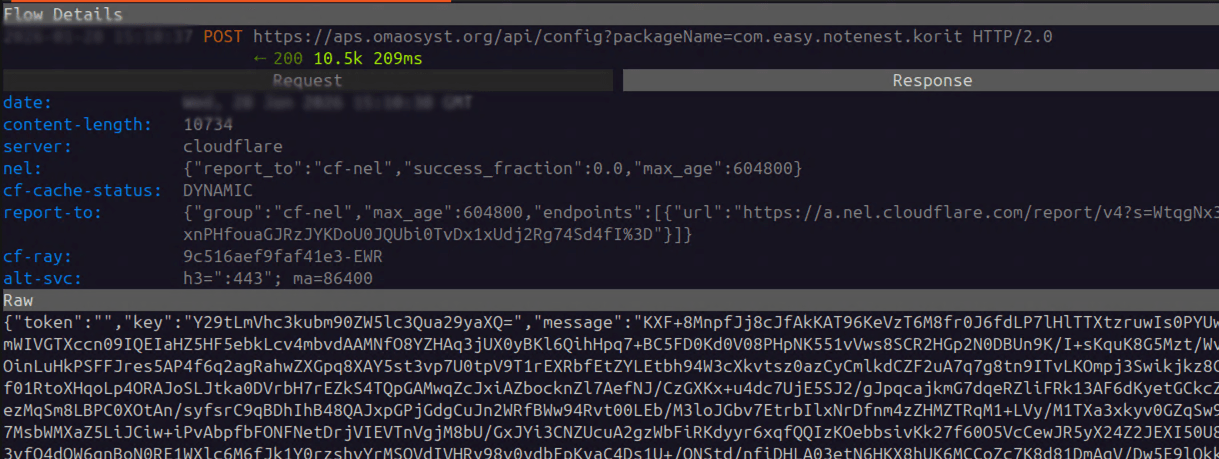
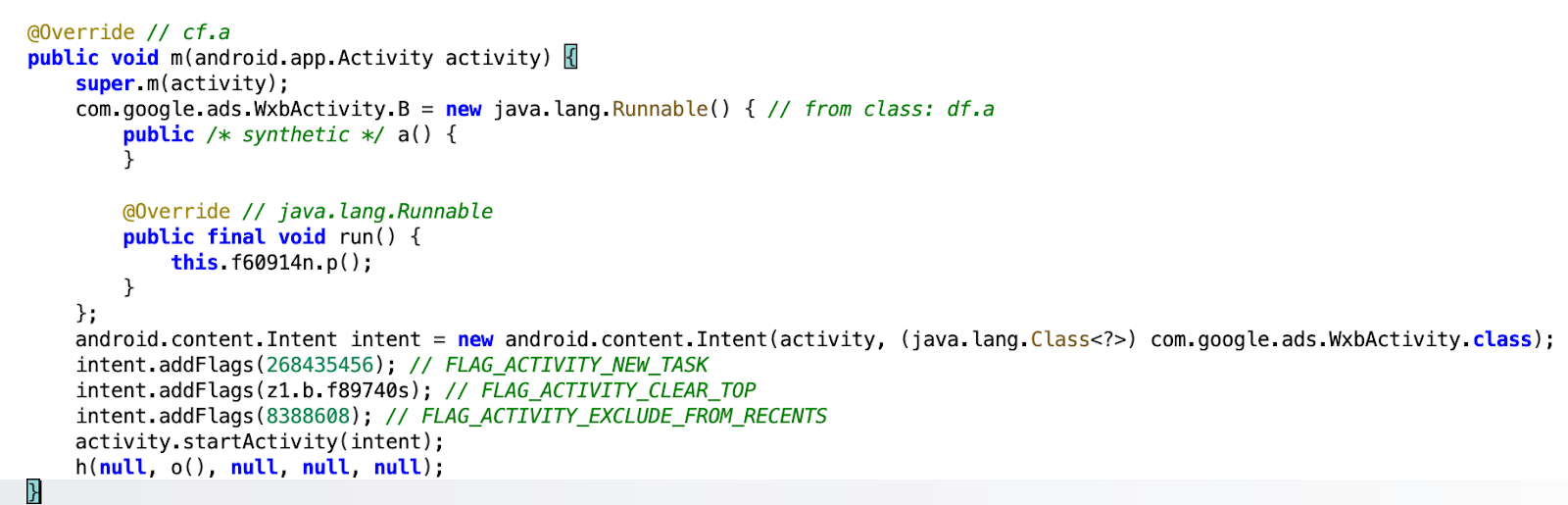
The automated clicks described above occur within a fullscreen WebView launched by the secondary Trapdoor-associated app, which loads HTML5 domains served by the C2 infrastructure. The C2 request contains click-related configuration including delays and banner identifiers, ensuring that the clicks map to specific ad banners on the HTML5 pages.
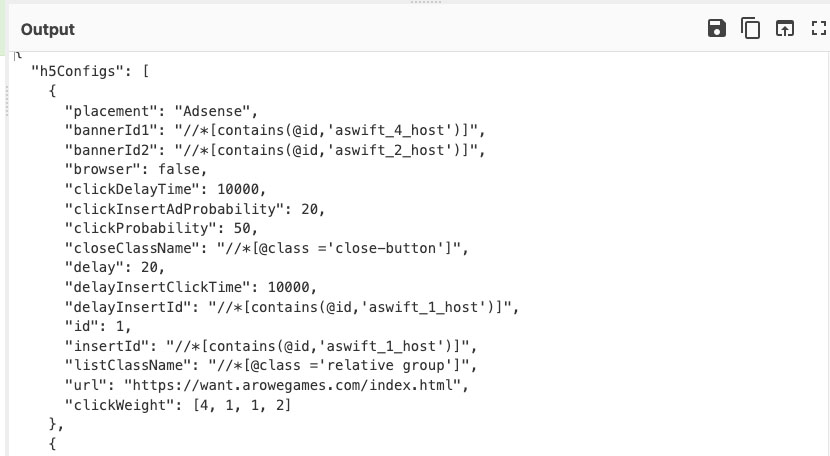
The WebView is also configured to keep it hidden from users while it accesses HTML5 domains and requests/clicks on ads:
As noted above, the use of H5 cashout domains as the monetization layer connects Trapdoor to a broader pattern observed by Satori researchers, as several previously-reported operations used H5 game and news domains as cashout mechanisms. This convergence of cashout infrastructure across multiple distinct operations reinforces the need for ongoing monitoring of HTML5 domain networks as a common monetization tactic in modern ad fraud.
Evading Detection: Anti-Analysis and Obfuscation
Beyond the abuse of the attribution technology, Trapdoor-associated apps employ several anti-analysis and obfuscation techniques designed to resist both static and dynamic examination.
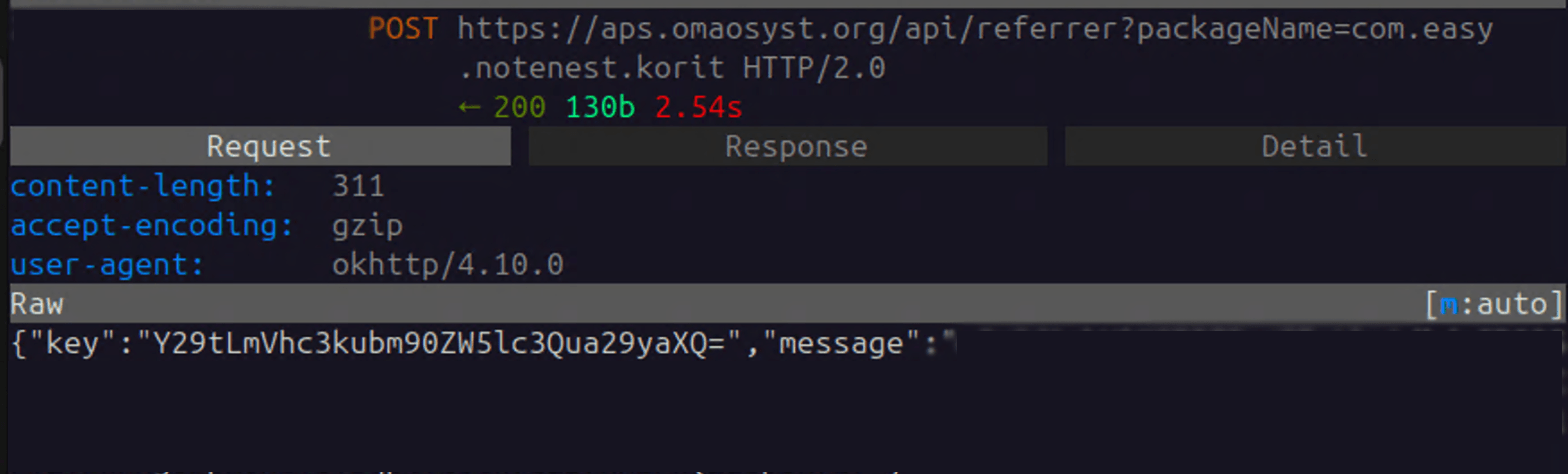
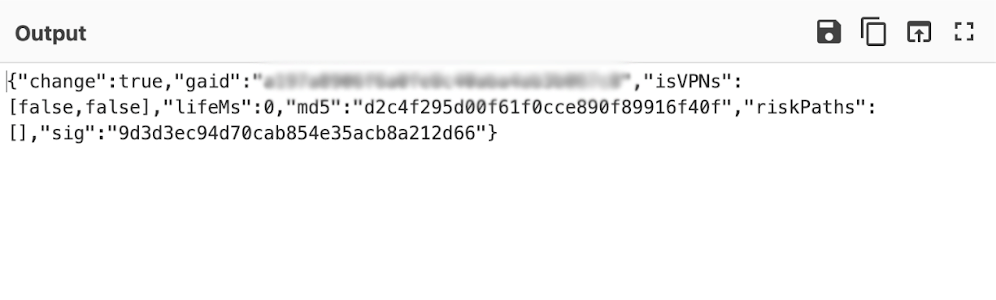
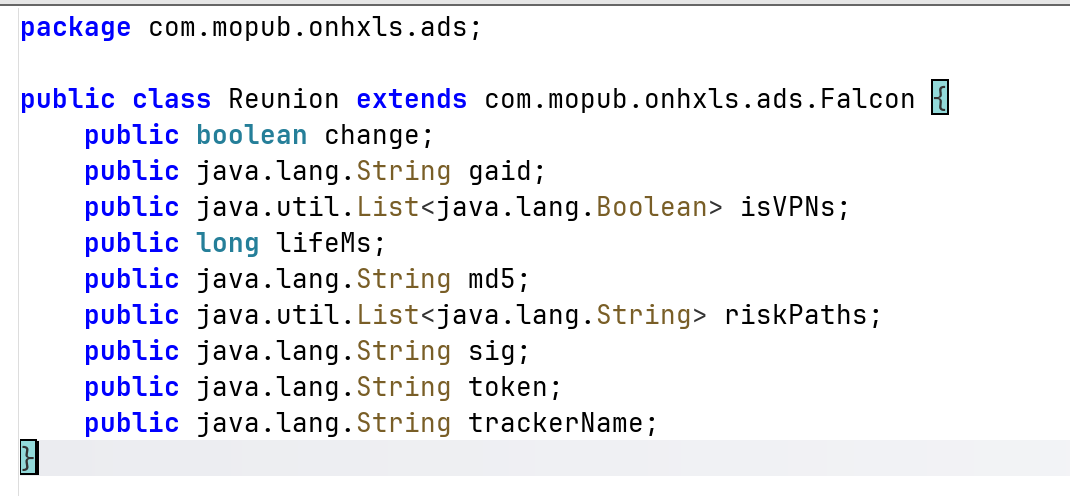
Anti-analysis signals. A separate C2 request and response to /api/referrer includes anti-analysis signals, including riskPaths for rooted-device and debugging indicators, and checks for VPN usage. The VPN check is particularly notable: analysts frequently rely on VPNs and local interception tooling during mobile reverse engineering, meaning this check is specifically calibrated to detect researcher environments.
Native packing and code virtualization. Most samples analyzed by Satori researchers use a native packer combined with code virtualization and string encryption. These techniques make static analysis significantly more difficult and slow down reverse engineering efforts.
SDK impersonation. Some Trapdoor variants attempt to blend into the Android ecosystem by impersonating legitimate SDKs. Researchers observed code structures mimicking a commonly-used advertising SDK, which may help malicious logic pass initial inspection.
Taken together, these evasion tactics reflect a threat actor that has invested considerable effort in making Trapdoor difficult to detect and analyze through conventional means.
How HUMAN Protects from Trapdoor
HUMAN has deployed protections against Trapdoor across its Advertising Protection suite. Customers partnering with HUMAN for Ad Fraud Defense and Ad Click Defense are protected from the impact of Trapdoor and the hidden click fraud generated by Trapdoor’s apps.
Trapdoor’s threat actors continue to develop and publish apps connected to this operation. Researchers have found multiple new batches of apps and domains as this report was being developed, and continue to monitor the threat actors for new apps, new domains, and new adaptations of their techniques.
Conclusion
Trapdoor is a reminder that threats to the digital advertising ecosystem do not neatly fall into single categories. By fusing malvertising distribution with hidden ad fraud monetization, Trapdoor creates a pipeline in which each stage fuels the next: malvertising drives secondary app installs, those apps generate fraudulent ad revenue, and that revenue can fund further malvertising campaigns. The operation’s use of attribution tools as an evasion mechanism reflects a broader trend of threat actors repurposing the ecosystem’s own infrastructure against it. Additionally, Trapdoor represents another instance of threat actors using HTML5 gaming and news sites as a cashout mechanism.
With 455 apps and 183 C2 domains and growing, Trapdoor’s scale underscores the need for continuous, aggressive threat intelligence. The threat actors behind this operation have demonstrated a willingness to adapt: publishing new apps, cycling through domains, and layering obfuscation techniques to stay ahead of detection. HUMAN’s Satori team will continue to track and disrupt Trapdoor as it evolves.